
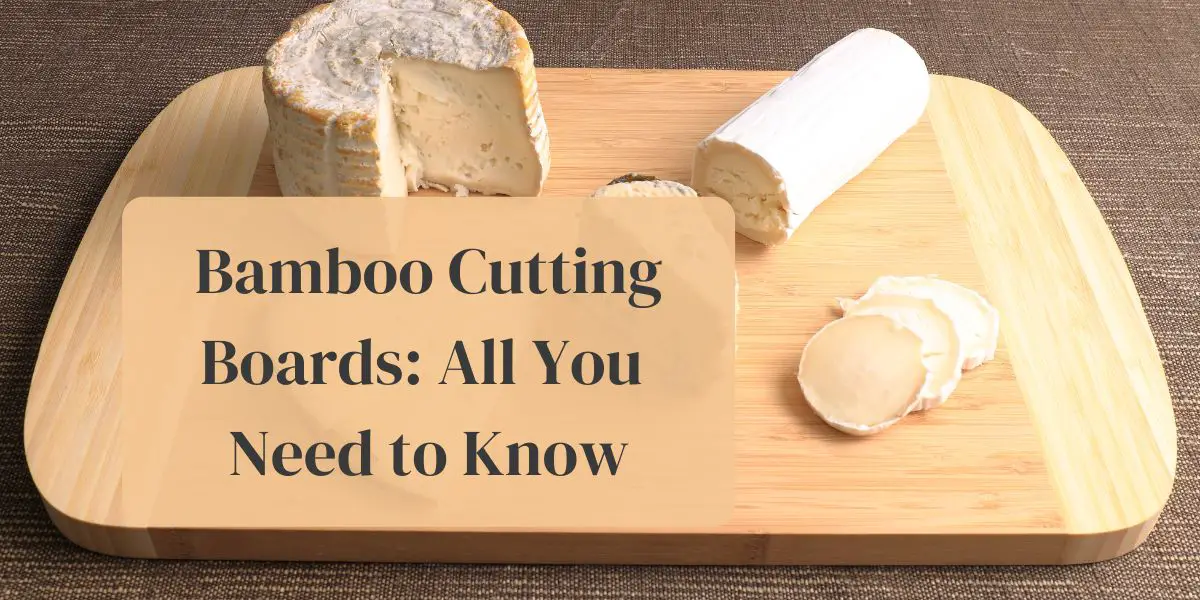
Bamboo cutting boards are hard, light and relatively resistant to moisture, but they are not maintenance-free. They can crack or warp if soaked, may dull knives faster than some hardwoods and often contain laminated strips joined with adhesive.
Food safety depends more on cleaning, drying, separation and timely replacement than on choosing one supposedly antibacterial material. A sound bamboo board can be safe when it is used and maintained correctly.
Bamboo cutting boards at a glance
| Potential advantage | Potential drawback | Practical response |
|---|---|---|
| Hard, dense surface | Can be harder on knife edges | Use a sharp knife and avoid glass-hard surfaces |
| Absorbs relatively little moisture | Can still warp or split when soaked | Hand-wash and dry promptly |
| Renewable plant material | Sourcing, resin and transport vary | Check traceability and construction |
| Light and easy to move | Thin boards can slide | Choose adequate thickness and non-slip support |
| Available in many sizes | Laminated joints can separate | Inspect glue lines and retire damaged boards |
Are bamboo boards food-safe?
The US Department of Agriculture says consumers may choose wood or a non-porous surface and notes that bamboo is harder and less porous than many hardwoods. Its cutting-board guidance recommends separate boards for raw meat, poultry and seafood and for foods that will not be cooked.
No board stays safe when it has deep grooves, open cracks or separated laminations. North Carolina Cooperative Extension’s current food-safety advice emphasises cleaning and sanitising correctly regardless of whether the board is wood or non-porous.
Cleaning and drying
- Wash promptly with hot water and dish detergent after use.
- Scrub both sides so moisture exposure remains more even.
- Rinse and stand the board on edge to dry with air circulation.
- Do not leave it soaking in a sink.
- Do not put it in a dishwasher unless the manufacturer explicitly permits it.
- Use a food-safe sanitising method appropriate to the board and local guidance.
Never mix cleaning chemicals. If a board has held raw meat, poultry or seafood, clean it immediately and keep it separate from produce and ready-to-eat foods.
Oiling and maintenance
If the maker recommends oiling, use a food-grade product intended for cutting boards. Cooking oils can become rancid. Apply only to a clean, completely dry board and follow the product instructions. Oil can slow moisture movement; it cannot repair an open crack or make a damaged board hygienic.
Bamboo, hardwood or plastic?
Bamboo is often harder than maple or beech, which can increase knife wear. Hardwood can be gentler on edges and may be repairable by resurfacing. Plastic is light and often dishwasher-safe, but deep knife grooves can be difficult to clean and the surface eventually needs replacement.
There is no universal winner. Select a material you can clean correctly, keep dry and replace when damaged. For heavy chopping, a well-made end-grain hardwood board may suit knives better; for a light board used for produce, bamboo can be practical.
What to check before buying
- Enough thickness to resist flexing and warping
- Flat surface without open glue lines or splinters
- Rounded edges and stable grip on the bench
- Size that fits the sink and drying space
- Clear care instructions and warranty
- Food-contact-safe adhesive and finish information
- Traceable bamboo sourcing rather than a vague green claim
FSC certification can apply to bamboo from natural forests or plantations, according to the Forest Stewardship Council. Certification addresses sourcing and chain of custody; it does not by itself prove that the adhesive, finish or complete board is food-safe.
When to replace a cutting board
- A crack stays open or traps food
- Laminated strips separate
- The board rocks or is badly warped
- Deep grooves cannot be cleaned effectively
- There is persistent odour, mould or surface breakdown
- A finish flakes or exposes sharp fibres
A retired clean board may be reused for a non-food task where splinters and contamination are not concerns. Do not keep a damaged board in food preparation simply to avoid waste.
For more material guidance, see our bamboo organisers guide and our comparison of bamboo bath mats.
Bottom line
Bamboo cutting boards are a reasonable kitchen option, not a miracle material. Choose a flat, well-finished board with disclosed construction, separate raw and ready-to-eat foods, wash and dry it promptly, and replace it when cracks or deep grooves make thorough cleaning difficult.





Plastic cutting boards can be put in the dishwasher, which makes them much easier to clean. I hate standing there with soap and brush to clean any wooden (even bamboo) cutting board. Seriously, it feels like a waste of time.
So this article tells me that NOTHING is wrong With using bamboo cutting Boards. Noted.
And yes, I will buy a New Board from Amazon, but I am not sure that I will buy the one you recommend. Maybe you should Write a bit more on this article before you publish?
In relation to Your other articles on this website, this isn’t too helpful for me 🙂
Hello Gaya, I see that the article has some flaws. 🙂
I do agree with you. And yes – the title is slightly misleading. There isn’t anything wrong with buying bamboo cutting boards.