
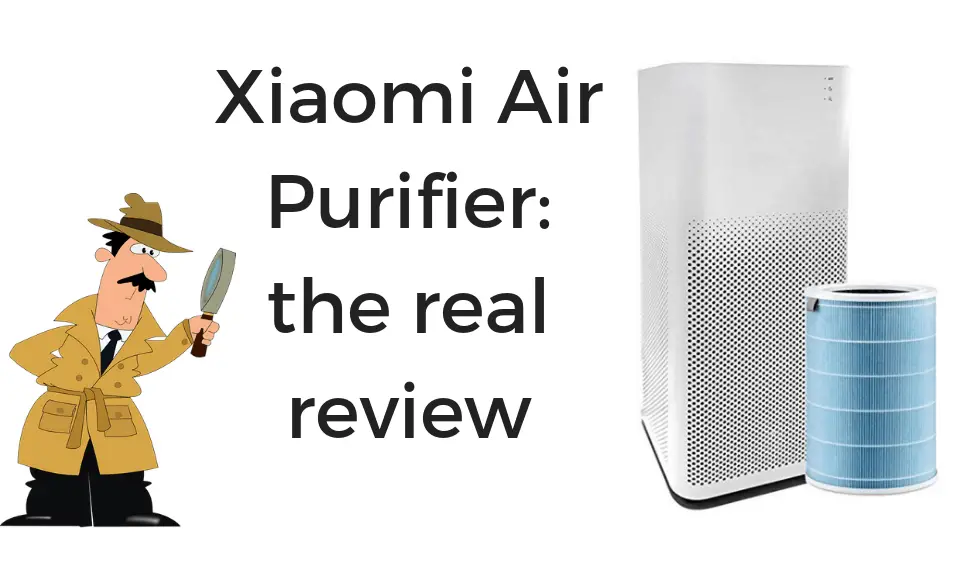
This is a retrospective review of an early Xiaomi Mi Air Purifier bought second-hand and used in a heavily polluted city. The original owner test found that it reduced the displayed fine-particle reading from roughly 51–53 to 2 over about four hours, with a separate consumer monitor showing a similar result.
That experience remains useful, but it is not a laboratory test and should not be applied automatically to every current Xiaomi model. Product specifications, filters, apps and regional availability have changed since the purifier was purchased.
The original real-world test
The purifier was used in a large apartment where outdoor PM2.5 pollution was frequently obvious. Two units were eventually placed in separate areas. The machine’s app reported the room’s particle reading, fan mode and operating status.
To check whether the built-in reading was merely optimistic, the owner compared it with a separate handheld monitor. At the start, the handheld device read 53 while the Xiaomi reported 51. After several hours on a high setting, both showed a reading around 2.
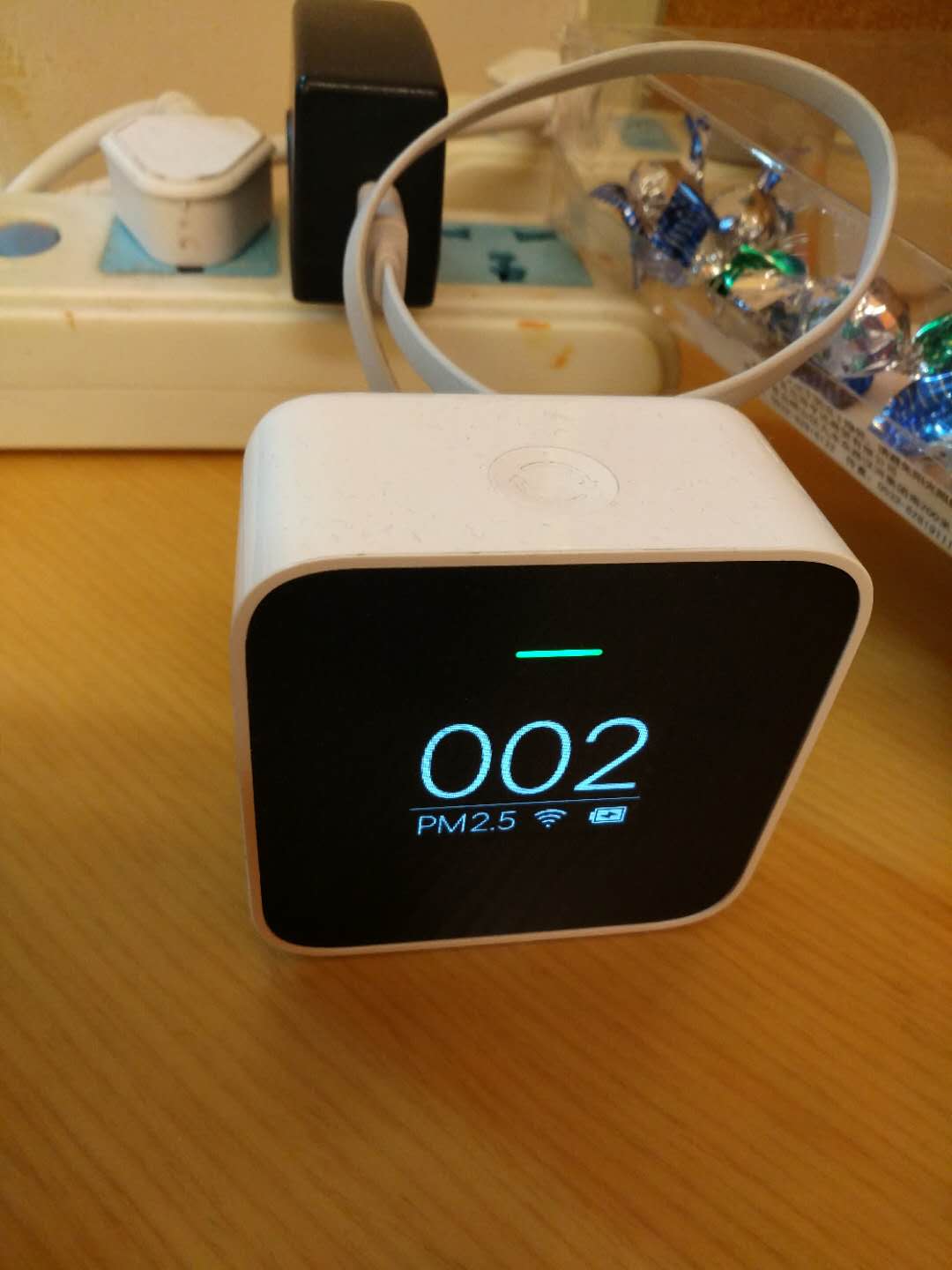
This supports a modest conclusion: in that room, under those conditions, the purifier and monitor recorded a large reduction in airborne particles. It does not establish calibrated accuracy, removal of gases or performance in every room.
What the purifier did well
Particle reduction
The strongest evidence from the owner experience was the falling particle count. That is consistent with the role of a particle filter: repeatedly circulating room air and trapping a portion of airborne particles on each pass.
Quiet automatic operation
At lower speeds, the unit was quiet enough to use in a bedroom. Noise increased in the strongest mode, as expected. Automatic operation made it easier to run the purifier for long periods rather than switching it on only when outdoor pollution looked bad.
Compact vertical design
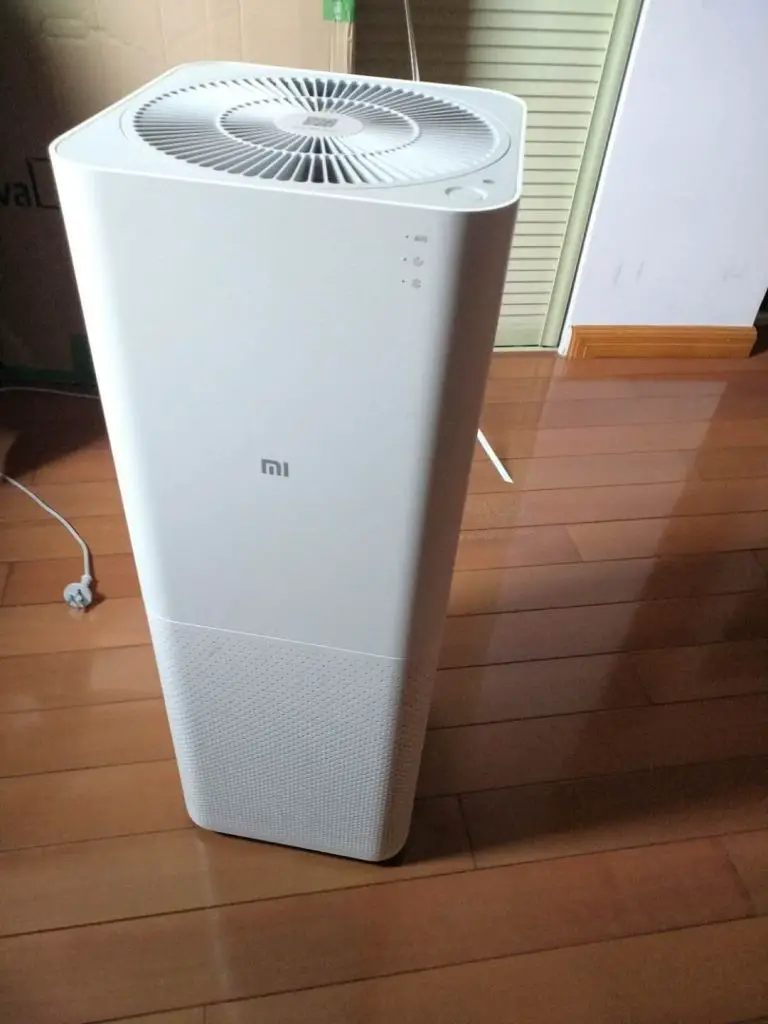
The tall rectangular housing used relatively little floor space and was easy to move. Airflow still needs clearance: hiding any purifier behind furniture or pressing it against curtains can reduce circulation.
Limitations of the original review
- The exact early model and filter specification may not match products now sold under similar names.
- The separate monitor was a consumer device, not a calibrated reference instrument.
- The test did not control room volume, ventilation, outdoor infiltration or particle sources.
- A particle reading does not measure gases such as carbon monoxide or every volatile organic compound.
- No direct comparison was made with another purifier under identical conditions.
How to judge a current Xiaomi purifier
Start with clean air delivery rate, or CADR, for particles. It combines airflow and removal efficiency into a measure of useful clean air. The appropriate size depends on the room and desired air changes, not just the manufacturer’s maximum-area headline.
The U.S. EPA recommends choosing a portable cleaner with a CADR large enough for the room. Its guide to air cleaners in the home also explains that particle filters do not automatically remove gases and that source control and ventilation still matter.
Also check replacement-filter availability and cost, noise at the speed you will actually use, energy consumption, sensor behaviour, app dependence and whether the unit intentionally generates ozone. A purifier that is cheap to buy but difficult to maintain may become electronic waste prematurely.
What an air purifier cannot do
A portable purifier treats air in a room; it does not fix mould moisture, remove a carbon-monoxide source or replace kitchen extraction. It cannot stop outdoor pollution entering through every gap. During smoke events, close unnecessary openings, reduce indoor particle sources and operate an appropriately sized purifier continuously where people spend time.
The EPA notes that portable air cleaners and HVAC filters can reduce indoor pollutants but cannot remove them all. See its broader air-cleaner and home-filter guidance.
Sustainability considerations
Buying the original unit second-hand extended the life of an existing appliance. That benefit lasts only if replacement filters remain available and the fan and electronics survive. Run the purifier at the lowest speed that achieves the required particle control, replace filters according to measured conditions and manufacturer limits, and recycle the appliance through an appropriate electronic-waste program at end of life.
For other practical household treatment decisions, our home purification guide uses the same test-first principle: identify the pollutant before buying equipment.
Verdict
The early Xiaomi Mi Air Purifier performed convincingly in the original owner’s apartment and the separate monitor broadly agreed with its particle reading. That supports the usefulness of the tested unit, not a blanket endorsement of every newer Xiaomi purifier. For a current purchase, compare verified CADR, room size, noise and long-term filter supply before relying on the brand name.





Xiaomi is, by far, the best air purifier I’ve tried.
I didn’t live in Shanghai like you, but I lived in Beijing for a while. That was equally bad;)
Seems like a lot of people who have lived in China choose to buy Xiaomi. And I’m just judging that based on what I can read in this comment section.
Thumbs up. I love Xiaomi myself.
I bought a Xiaomi air purifier and was quite happy.
Bought it in China though.
Xiaomi is the very best air purifier out there. I have been in the business for 10 years and can say that a lot of people don’t want it simply because it’s chinese.
On the other hand: who got the most experience with air pullation in the world? Well, the Chinese…
So I am not very happy with how Xiaomi has been treated in the market.