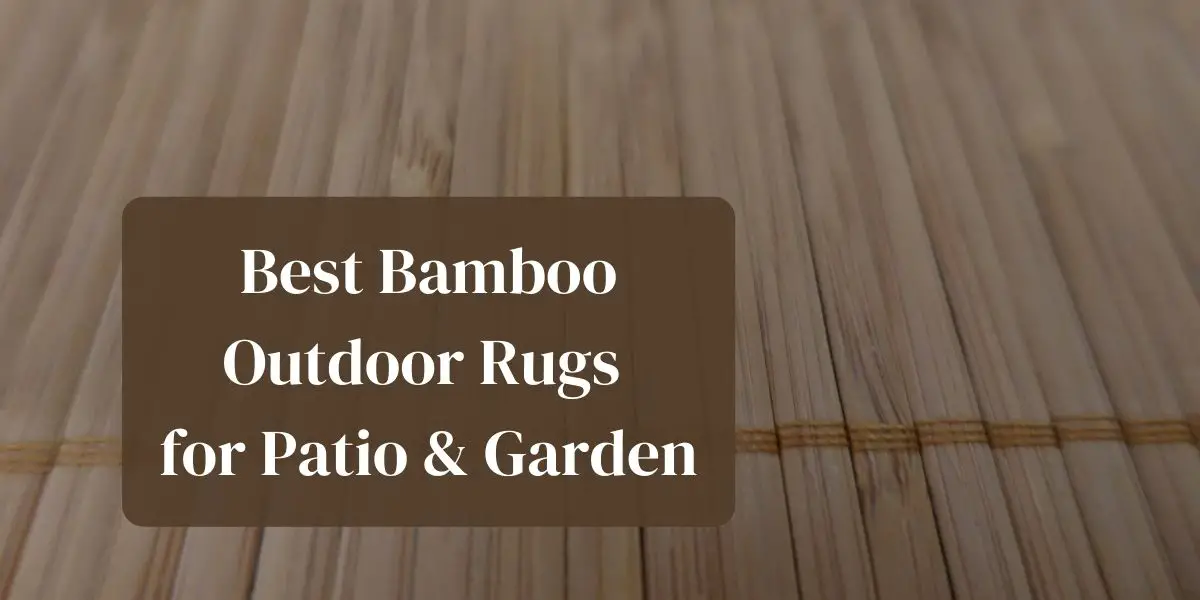
Bamboo outdoor rugs are best used in covered, dry areas, not left through repeated rain and full sun. Most products sold under this name are rigid slat mats or roll-up bamboo runners rather than weatherproof woven rugs. They can work beautifully on a sheltered balcony, screened porch or covered patio, but they are a risky choice beside an uncovered pool or on an exposed deck.
This guide replaces a list of old marketplace products with something more useful: how to recognise the different materials, choose the right rug for the location and avoid buying “natural” decor that fails after one wet season.
Are bamboo rugs suitable for outdoor use?
Only when the manufacturer explicitly rates the complete product for the conditions it will face. Bamboo is a lignocellulosic natural material. Outdoor performance depends on treatment, finish, adhesive, backing, fasteners, drainage and how quickly the mat can dry. “Bamboo” by itself is not a weather-resistance rating.
Research published through the US Forest Service found that heat treatment can improve bamboo’s resistance to fungal decay. That also demonstrates why untreated bamboo and a properly engineered outdoor product should not be treated as equivalent. Repeated moisture, trapped debris and damaged finish create conditions for staining, swelling, mould and delamination.
What “bamboo outdoor rug” can mean
| Type | Best location | Main weakness |
|---|---|---|
| Bamboo slat mat or runner | Covered patio, balcony or porch | Finish and backing can deteriorate when repeatedly wet |
| Bamboo bath or shower mat | Short, controlled wetting with good drainage | Not automatically rated for permanent outdoor exposure |
| Woven “bamboo” textile rug | Usually indoors unless explicitly outdoor-rated | May use processed bamboo fibre blended with synthetics |
| Bamboo-look polypropylene rug | Exposed outdoor areas when UV and weather rated | Fossil-based plastic and possible fibre shedding |
Where bamboo works and where it does not
Good locations
- A roofed balcony protected from wind-driven rain
- A covered patio with a dry, free-draining floor
- A screened porch where the mat can be rolled up during severe weather
- A doorway under a deep eave, provided the product has a non-slip backing
Poor locations
- An uncovered deck exposed to regular rain
- Direct contact with soil or damp grass
- A pool edge where the mat stays wet and slip resistance is critical
- Full sun unless the manufacturer provides a clear UV and outdoor-use rating
How to choose a bamboo patio mat
Look for a specific outdoor-use statement
Ignore lifestyle photography and search the specification or care sheet for “outdoor,” “covered outdoor,” UV exposure and water-contact limitations. If the seller only describes the product as natural, water-resistant or spa-like, assume it needs protection.
Check the backing and edges
The backing should allow water to escape rather than trap it beneath the slats. Rubber or polymer pads need to stay attached in heat and moisture. Inspect edge binding, hinges and adhesive because these often fail before the bamboo surface.
Choose a safe surface
A rigid mat can rock on uneven pavers, and a smooth backing can slide on sealed decking. Look for a credible slip-resistance claim and follow the manufacturer’s placement instructions. Do not use a decorative mat as a substitute for a purpose-rated pool or accessibility surface.
Ask where the bamboo came from
Fast growth does not guarantee responsible production. FSC explains that bamboo can be covered by forest-management and chain-of-custody certification. A valid product-specific FSC claim is more meaningful than an unsupported “sustainable bamboo” label. FSC has also reported integrity risks in some bamboo supply chains, which is another reason to verify the certificate rather than rely on the word alone.
Are bamboo rugs environmentally friendly?
They can be, particularly when responsibly sourced bamboo replaces more resource-intensive material and the finished product lasts. The complete construction still matters. A bamboo mat may contain synthetic backing, polyurethane finish, resin, glue, metal fasteners and plastic packaging. Those additions can improve durability but complicate recycling or composting.
The most sustainable rug is usually the one that suits the location and remains in service. A rapidly renewable material that must be replaced every year is not necessarily preferable to a durable rug already in use.
Better alternatives for exposed spaces
- Recycled-plastic outdoor rugs: highly weather resistant, but still plastic and potentially prone to fibre shedding. Choose a tightly woven, repairable design and keep it for as long as possible.
- Purpose-rated polypropylene rugs: practical for full exposure, though made from fossil feedstocks. Durability and responsible end-of-life handling matter.
- Coir doormats: useful in sheltered entrances, but they also deteriorate when kept continuously wet.
- No rug: on a frequently wet deck, an easy-to-clean bare surface may be the safest and lowest-waste option.
Care and maintenance
- Shake or vacuum away grit before it abrades the finish.
- Wipe with a lightly damp cloth and only the cleaner allowed by the manufacturer.
- Dry both sides fully before rolling or storing.
- Move the mat periodically so moisture and dirt do not remain trapped underneath.
- Store it indoors during prolonged rain, frost or severe heat unless explicitly rated for those conditions.
For related material choices, see our guides to bamboo bath mats, bamboo soap dispensers, bamboo cutting boards and bamboo keyboards and mice.
Verdict
Buy a bamboo outdoor rug only for a sheltered space and only when the manufacturer clearly describes its outdoor limitations. For an uncovered patio, choose a genuinely weather-rated alternative or leave the surface bare. The material’s natural appearance is appealing, but correct placement is what determines whether the purchase lasts.