
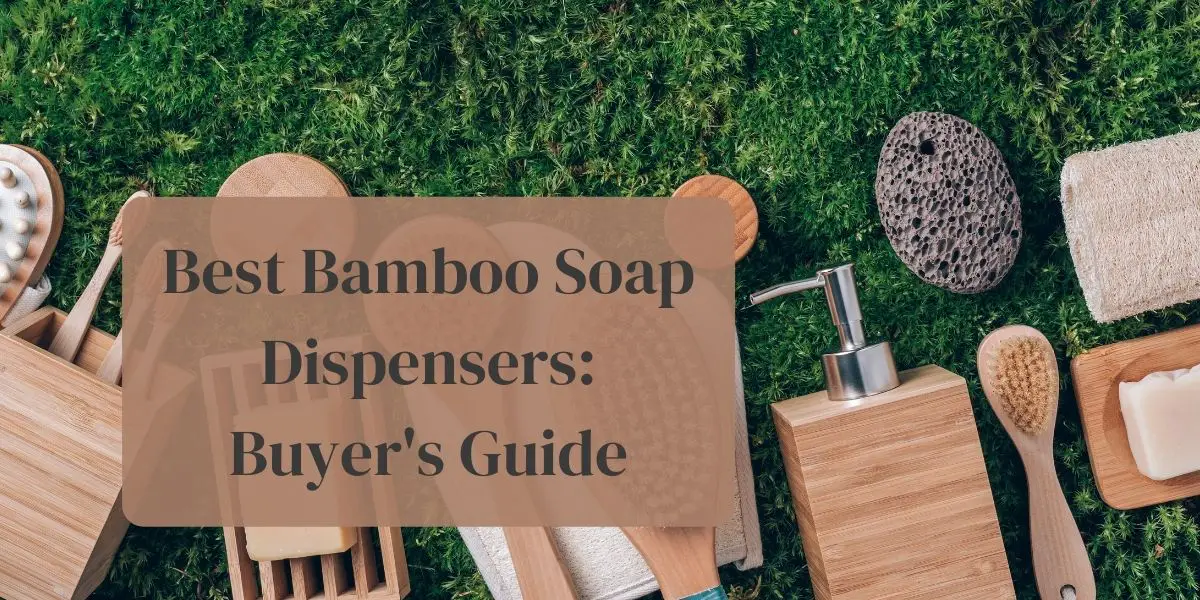
A bamboo soap dispenser is rarely made entirely from bamboo. Most use bamboo as a sleeve, lid or decorative shell around a glass, ceramic, stainless-steel or plastic reservoir. That distinction matters: the pump and inner bottle determine how well the dispenser works, while the bamboo needs protection from standing water.
The best choice is a refillable dispenser with a reliable, replaceable pump, an easy-to-clean reservoir and responsibly sourced bamboo. A bamboo finish alone does not make a product durable or low-impact.
What matters most
| Feature | Why it matters | What to check |
|---|---|---|
| Pump | The most failure-prone part | Stainless-steel exterior, replaceable mechanism, smooth return |
| Reservoir | Controls cleaning and soap compatibility | Wide opening, visible fill level or removable liner |
| Bamboo protection | Reduces swelling and cracking | Sealed surfaces and no exposed end grain near pooled water |
| Base | Prevents slipping and trapped moisture | Stable footprint, drainage or removable tray |
| Sourcing | Bamboo production is not impact-free | FSC certification or credible chain-of-custody information |
Choose the reservoir before the finish
Glass is easy to inspect and does not hold odours, but it can break on tile. Stainless steel is durable and opaque, although soap residue may be harder to see. A plastic liner is light and resistant to breakage; keeping one sturdy dispenser in service can be preferable to repeatedly replacing a decorative but fragile product.
For thick lotions or high-viscosity dish soap, check that the pump is designed for the liquid. Foaming dispensers require diluted foaming-soap formulations and a different pump mechanism.
Treat bamboo as a wet-area material
Bamboo can perform well in a bathroom or kitchen when it is properly laminated, sealed and allowed to dry. Persistent water around the pump collar or base can penetrate seams, lift coatings and encourage staining.
- Wipe the collar and base when soap or water collects.
- Do not leave the dispenser sitting in a permanently wet dish.
- Follow the maker’s instructions before using vinegar, bleach or a dishwasher.
- Let the bamboo shell dry fully if the reservoir is removed for washing.
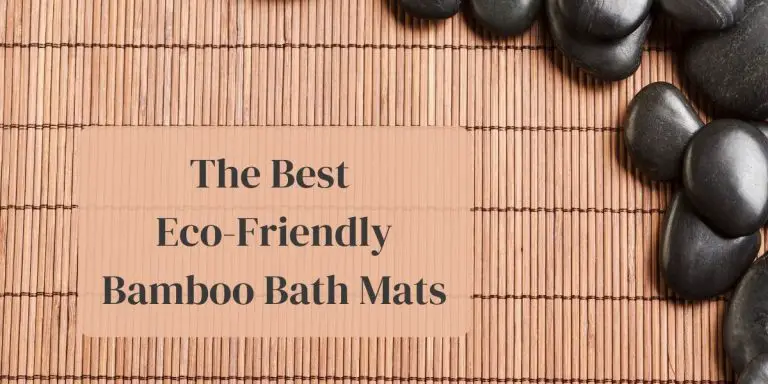
The same moisture logic applies to other bamboo bathroom products. Our bamboo bath-mat guide explains why ventilation and construction are more important than the material label alone.
How sustainable is a bamboo dispenser?
Bamboo is a fast-growing grass and can be used in certified forest-product supply chains. However, plantation management, adhesives, coatings, transport and product lifespan all affect the final footprint. The Forest Stewardship Council notes that bamboo can be FSC certified, including material used for household goods.
Certification is useful because bamboo marketing is not always reliable. FSC has also documented risks and misleading claims in bamboo supply chains. For a dispenser, longevity and verifiable sourcing are stronger signals than vague biodegradable or eco-friendly wording.
A practical buying checklist
- Prefer a pump that can be unscrewed and replaced rather than a sealed proprietary top.
- Check dimensions and capacity; an oversized bottle may be awkward beside a small basin.
- Choose a stable base and a neck that can be cleaned without special brushes.
- Look for a warranty or spare-pump option.
- Ask whether the bamboo is solid, laminated or veneer and how it is sealed.
- Avoid unverified claims that the whole product is plastic-free when the pump contains plastic parts.
Bamboo, glass or stainless steel?
Choose bamboo when its warm appearance suits the room and you are willing to keep the exterior dry. Choose glass when visibility and easy cleaning matter most. Choose stainless steel when impact resistance is the priority. A mixed-material dispenser is not automatically a problem if it can be disassembled, repaired and used for years.
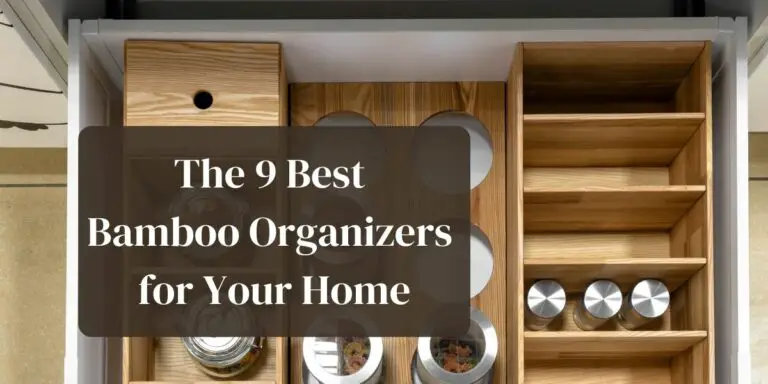
For more durable bamboo household choices, see our guides to bamboo organisers and bamboo cutting boards.
Bottom line
Buy the pump and reservoir first, then the bamboo finish. A repairable dispenser with a protected bamboo shell, credible sourcing and simple cleaning is likely to outlast a cheaper decorative model. Reusing the dispenser consistently is what turns it into a lower-waste choice.


The natural bamboo with its warm color is a modern version of wood we are familiar with in the Scandinavian style and is well suited for bathroom accessories.
Sure.
As a Scandinavian myself, I would say that being surrounded by bamboo products is almost something I’ve gotten used to now. 😉
Bamboo is a much stronger material than most other wooden materials. I went to a shop trying to ask if they had any bamboo soap dispensers, but they only said that they had something called TEAK.
I was sort of disappointed by that. Not only had I been looking forward to get the soap dispenser, but I feel that very few shop owners understand the importance of using more bamboo and less plastic.
The IKEA bamboo soap dispenser works well for me, but I udnerstand it doesn’t give a “luxurious feeling”. If you want to have a classy bathroom,,,,I agree. You need something else.
But it worked OK for me as I don’t live like a millionaire 😛
I can assure you that my home doesn’t seem like a millionaire’s home either 😉
But I would still go for a bamboo soap dispenser to give that extra “touch” to the bathroom.
Bamboo is beautiful, durable and sustainable – which makes it an incredibly attractive material.
One of the most amazing things about bamboo is that all the leftover material can be used. Even when the manufacturer make something like a soap dispenser, they can use the leftover material in the process. 🙂
Many people don’t know that. But it makes it a very versitle and great material for home decor.
Bamboo grows extremely fast, faster than any other plant. As it grows, bamboo absorbs 3-4 times more CO2 than living trees.
I agree! Thumbs up for bamboo 🙂
I bought one at IKEA but im confident its like 10 years ago?
It still works. It stands there by my kitchen sink and looks shamazing 😉 bamboo > plastic any day
many people that own bamboo soap dispensers are the same people that want to create a “scandinavian look” in their homes
unless you have the money: dont even try baby 😉 its not cheap to get that type of style home
for how long do these soap dispensers last?
Do you think plastic is a better alternative?
Hello Henriette. I am not sure exactly how long these soap dispensers will last. What I can say is that bamboo is a material that lasts for quite a long time.
Plastic is also a good alternative – as long as you use it for a long period of time. Plastic might be easier to clean. However, I find the wooden/bamboo dispensers more delightful in the way they look.
Bamboo is a material that doesn’t go old. Many soap dispensers and other bathroom accessories tend to go “old”.
And by “old” I mean:
1) Look old.
2) Start to smell.
3) Needs to be thrown out after about 3-4 years.
Bamboo products is much stronger than that. And I know it because I’ve been working with these types of products for more than a decade…and got a lot of customers in UK and USA that sell bamboo soap dispensers etc.
Hello. Interesting that you’ve actually worked with bamboo products for a while. I agree – it’s a super good material to make soap dispensers out of. And it looks like a lot of the big home decor corporations agree with us on that. 🙂
Even though I would love to buy a plastic soap dispenser, I’ve already figured out that bamboo is the best material.
There are many reasons for this to be the correct decision.
1) You do NOT pay much more for bamboo soap dispensers (at least those I saw on Amazon)
2) Plastic is harmful for the environment.
3) bamboo also looks good when it stands on the bathroom sink. It gives a luxury impression
Hello. I agree.
However, I find nearly “all” soap dispensers useful. The reason is that they all limit plastic waste.