
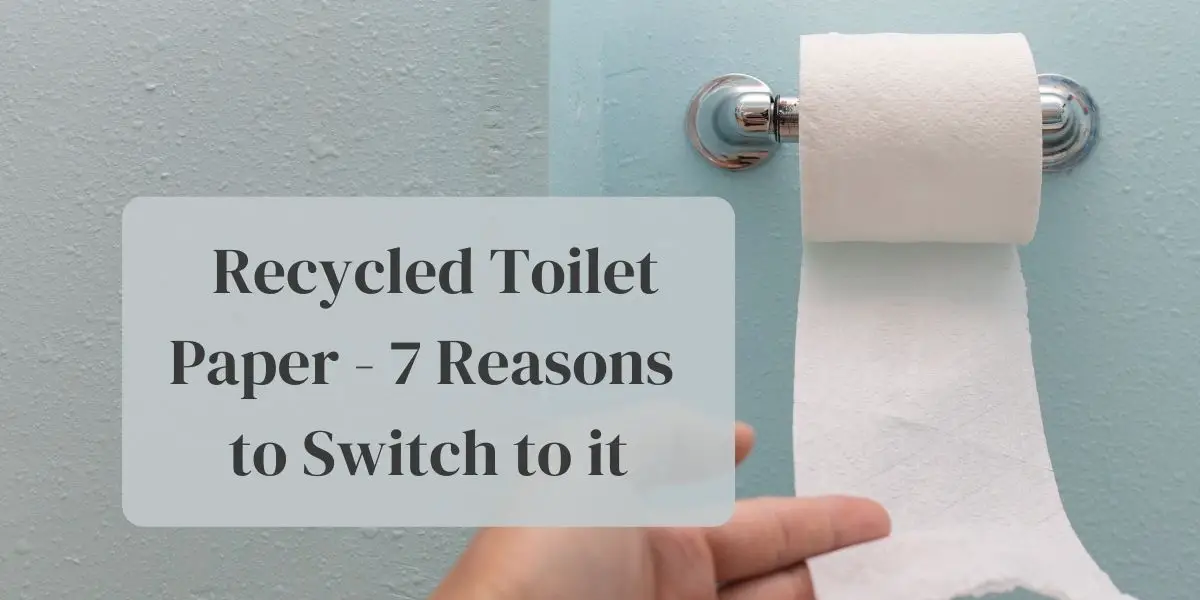
Recycled toilet paper can reduce demand for virgin tree fibre and give recovered paper another use before disposal. The strongest option usually contains a high proportion of post-consumer recycled fibre, avoids misleading forest claims and performs well enough that the household does not use excessive sheets.
It is not impact-free. Collection, de-inking, pulping, bleaching, drying, packaging and transport still use energy, water and chemicals. Product-specific evidence matters more than a green colour scheme.
Why recycled fibre matters
Toilet tissue has a very short useful life and is not recycled after use. Making it from recovered paper extends the value of fibre that has already been produced. It can also reduce pressure to turn long-lived forest carbon and habitat into a disposable product.
The Natural Resources Defense Council’s current Issue with Tissue assessment gives its strongest scores to many products made from recycled fibre and continues to scrutinise brands reliant on forest fibre.
Post-consumer and pre-consumer content
| Term | What it generally means | Why it matters |
|---|---|---|
| Post-consumer recycled | Paper recovered after household or business use | Creates demand for collected recycling |
| Pre-consumer recycled | Manufacturing offcuts or material diverted before consumer use | Useful, but may have been easier to recover |
| Total recycled content | A combination of recycled fibre sources | Check the post-consumer share separately |
| Virgin fibre | New pulp from harvested plants | Look for credible responsible-forestry certification |
Seven evidence-led benefits
- It reduces reliance on newly harvested fibre for a single-use product.
- It creates a market for recovered office and household paper.
- It keeps useful fibre circulating for another production cycle.
- It can reduce the habitat pressure associated with poorly managed forestry.
- High recycled content is easier for a shopper to verify than a vague eco-friendly claim.
- Unbleached or lower-impact processing options are available.
- It encourages manufacturers to compete on recycled inputs, packaging and transparency.
Trade-offs and misconceptions
Recycled tissue can require de-inking and cleaning. Softness, strength and dust vary by product, and a roll with fewer usable sheets may not be good value. Recycled paper is not automatically locally made, plastic-free or free from all chemical inputs.
Bamboo is a virgin fibre, despite being fast-growing. It may be preferable to poorly sourced forest fibre in some supply chains, but land use, processing energy, chemicals and transport still matter. Recycled content remains a useful first screen.
What labels can tell you
- Percentage of total and post-consumer recycled content
- FSC Recycled or another clearly defined chain-of-custody claim
- Bleaching method stated in specific terms
- Country of manufacture and fibre origin
- Roll length, sheet count and sheet size
- Packaging material and local recycling instructions
Forest Stewardship Council certification can verify recycled material or responsible sourcing within its scope. It does not compare softness, transport distance or complete life-cycle impact.
Plumbing and septic questions
A product’s recycled content does not by itself determine whether it will suit a low-flow toilet, older drain or septic system. Look for the manufacturer’s dispersibility information and follow the plumber, system maker and local authority’s advice. Never flush wipes unless the local wastewater authority explicitly accepts them.
How to choose
Our companion guide, Recycled Toilet Paper: How to Choose, compares the practical criteria in detail. Start with high post-consumer content, verify the claim, compare the actual paper per roll and buy a small quantity before committing to a case.
For other bathroom material choices, see our guide to bamboo bath mats.
Bottom line
Recycled toilet paper is a practical way to reduce demand for virgin fibre in a product that cannot be recycled after use. Choose high post-consumer content, check credible certification and compare performance, roll dimensions, packaging and manufacturing claims rather than relying on branding.


Using recycled toilet paper made out of bamboo’s are the best alternative of toilet paper’s made out of other trees. This can make a huge change in our environment conditions and how we act with our environment.
If you want to save your environment from plastic then we need definitely to switch our toilet paper with recycled toilet paper. Recycled paper is softer, sustainable, plastic-free and eco friendly. thanks for sharing your thought on recycled toilet paper. I hope people influence by your post and switch their regular toilet paper with recycled toilet paper.
I found this really interesting read wasn’t aware of how much water etch especially trees are used during this process thankyou
It’s not much difference of the feeling of it. And I can honestly say that I would not have felt the difference on recycled toilet paper vs normal toilet paper in a blind test.
Whatever we use first we need to think about reducing the specific thing and then about recycling it.
I agree – recycled toilet paper is just as soft as “normal” toilet paper 🙂
I’ve never thought that anything related to our bathroom could be making such a difference. But after seeing how “normal” toilet paper is made, I do absolutely agree that it’s great to make the switch 😉
Will try to buy the recycled toilet paper. What you’re saying about the softness, I am not sure … I’ve heard that normal toilet paper is (MUCH) softer compared to the recycled one
Hehe, I dare you to try! I wouldn’t say that normal toilet paper is (much) softer…
I had no idea something as “easy” as toilet paper would have any proper effect at all on the environment. Recycled toilet paper FOR THE WIN 😀