
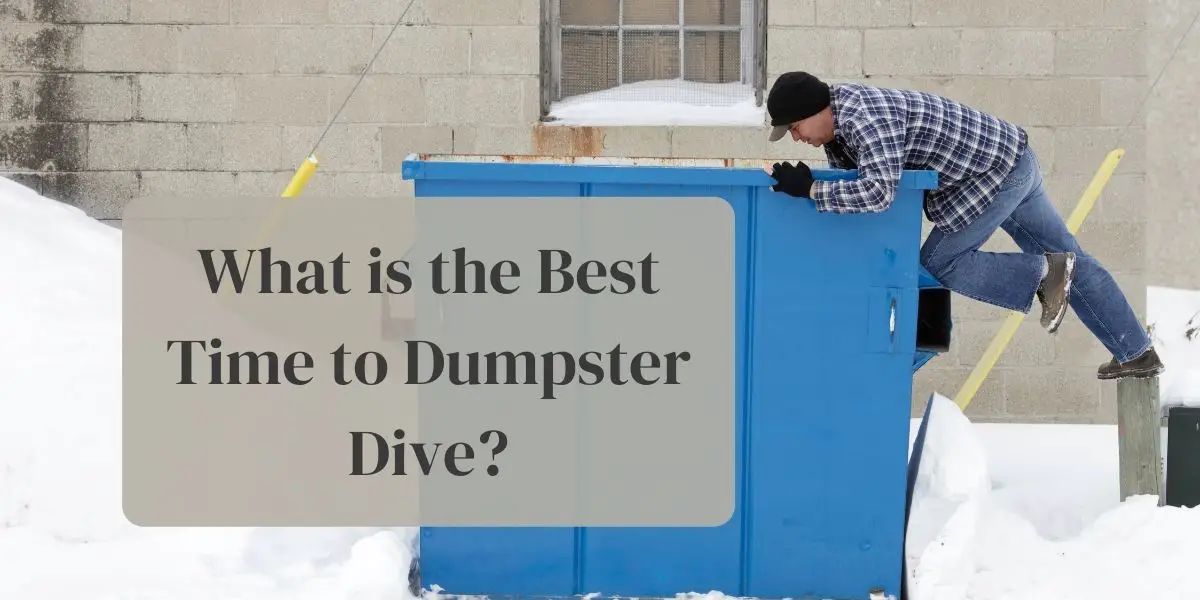
There is no universally safe or legal best time to dumpster dive. Visiting at night does not create permission, and it can increase risks from traffic, poor visibility, security responses and hidden hazards. The legality depends on the jurisdiction, property, ownership of discarded goods and how access is gained.
The safest approach is to ask the business for permission or use an organised food-rescue, community-fridge or surplus-food programme. This guide explains the risks without treating discarded food as reliably safe.
Is dumpster diving legal?
Laws differ between countries, states and councils. A bin may be accessible from a street while still belonging to a business or waste contractor. Entering private land, crossing a fence, ignoring a sign, opening a locked enclosure or refusing to leave can create trespass or other legal issues.
In Victoria, wilfully entering a private place without authority or lawful excuse is an offence listed under section 9 of the Summary Offences Act. The Sentencing Advisory Council’s offence browser provides the formal offence description. This is general information, not legal advice; check the law where the bin is located.
Permission is the clearest answer
Ask the manager or property owner whether items can be collected and where to wait. Permission can clarify access, reduce conflict and allow staff to separate usable goods before they enter a contaminated waste stream.
- Do not enter locked, fenced or signed areas without explicit authority.
- Leave immediately if the owner, manager or security staff asks.
- Do not damage a lock, lid, fence or container.
- Do not scatter waste or obstruct vehicles, loading bays or footpaths.
- Assume compactors and mechanical bins are life-threatening and never enter them.
Food safety is the central problem
A sealed package can still have been exposed to unsafe temperatures, pests, chemicals, broken glass or contamination from leaking waste. Smell and appearance cannot reliably identify every foodborne hazard.
Food Standards Australia New Zealand states that microorganisms can multiply quickly in the temperature danger zone of 5-60°C. Once discarded food’s time and temperature history is unknown, chilled meat, seafood, dairy, cooked rice, prepared meals and similar perishable foods should not be treated as safe.
Never rely on tasting
Do not taste food to test whether it is safe. Discard swollen, leaking, deeply dented or rusted cans and any package with a broken seal. People who are pregnant, older, immunocompromised or very young face greater consequences from foodborne illness and should follow specific health guidance.
Physical and biological hazards
- Broken glass, needles, sharp metal and exposed nails
- Cleaning chemicals, pesticides, batteries and unknown liquids
- Rodents, insects, mould and animal waste
- Unstable lids, deep bins and crushing or entrapment hazards
- Moving trucks, forklifts and low-light traffic
- Cuts exposed to contaminated material
If a person has permission to handle separated non-food goods, closed shoes, sturdy gloves, good lighting and handwashing reduce some risk. They do not make climbing into a bin or compactor safe.
Safer ways to recover surplus
- Ask a retailer to set aside suitable non-perishable goods before disposal.
- Use a surplus-food app or local community-fridge network.
- Volunteer with an established food-rescue organisation.
- Arrange collection of display materials, timber or packaging through the business.
- Support donation systems that preserve temperature records and traceability.
- Use council reuse centres and legal hard-rubbish channels for non-food items.
Foodbank programmes work with the food and grocery industry to recover edible products before they reach landfill. Their food-waste recovery overview shows why organised donation is safer and more scalable than searching mixed waste.
Reducing food waste upstream
Dumpster diving draws attention to waste, but prevention is better. Retail forecasting, clearer date labels, markdowns, donation, smaller inventories and household meal planning keep food usable for longer.
Our Too Good To Go review looks at one structured surplus-food model. The zero-waste kitchen guide covers practical prevention at home, while our analysis of fast food’s environmental effects explains the wider production and packaging pressures.
Bottom line
Timing does not remove the legal, food-safety or physical risks of dumpster diving. Obtain permission, stay out of compactors and enclosed bins, and do not eat perishable food with an unknown temperature history. Organised rescue and direct collection are safer ways to keep usable goods out of landfill.


I do dumpster diving for fun. it’s alright to get some food from it, but I’m more into it because of the game.
Its really juicy to find something valuable that you can sell on Ebay!! 😉
Dumpster diving is amazing and eco-friendly. Just be safe and use the right gear. If you dont have the right supplies check out [link removed].com
Thanks, Grant. But this isn’t the place to link your own website.
Best,
Dumpster diving, is to me, one of the worst things you can do. Just imagine going to some junkyard and pick up food. That is properly disgusting.