
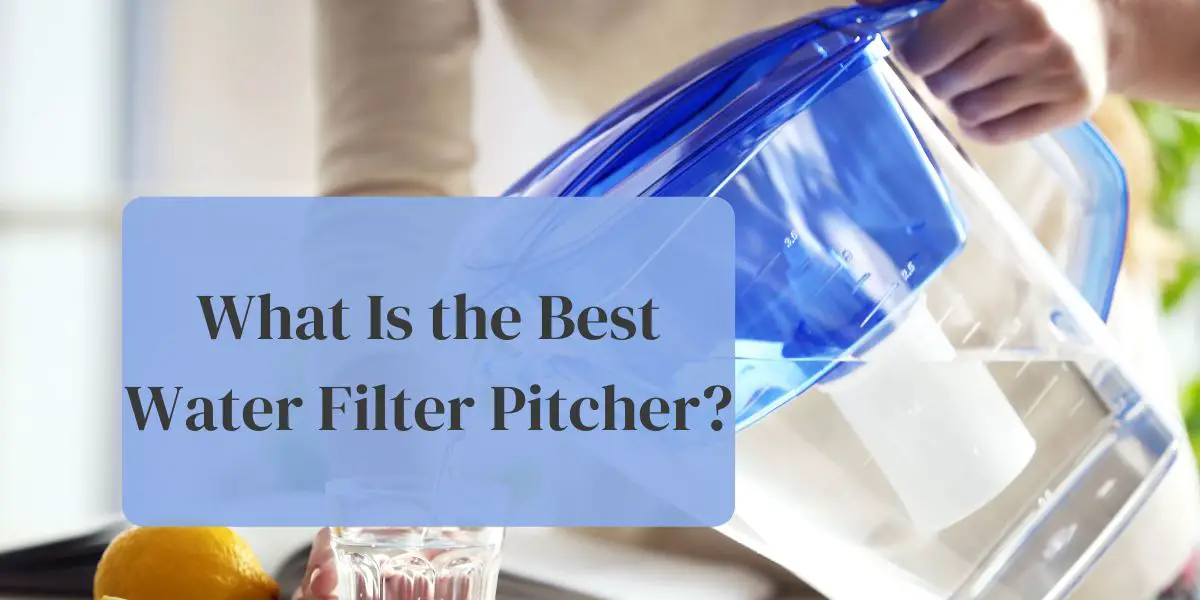
The best water filter pitcher is not simply the one that removes the longest list of contaminants. It is the pitcher certified for the problem in your water, sized for your household and affordable to keep supplied with replacement filters.
For most households, four current systems deserve a place on the shortlist: Brita with the Elite filter, PUR Plus, LifeStraw Home and Culligan ZeroWater. They do different jobs. This guide explains those differences without assuming that every reader needs the most aggressive filter.
How we selected them: We compared current third-party certifications, official performance data, capacity, replacement schedules and practical design. We did not conduct laboratory testing, so we do not describe these as hands-on test results.
The best water filter pitchers at a glance
| Pitcher system | Best for | Main trade-off |
|---|---|---|
| Brita pitcher with Elite filter | Long filter life and broad everyday contaminant reduction | Confirm that the pitcher is compatible with the Elite filter |
| PUR Plus pitcher filter | A strong all-round certification profile | More frequent replacement than some long-life filters |
| LifeStraw Home Essential | Broad chemical and particulate reduction | Two-stage maintenance and a slower flow than basic carbon filters |
| Culligan ZeroWater 5-stage | Very low dissolved-solids output and certified reduction of several health-related contaminants | Filter life varies greatly with source-water quality |
1. Brita with the Elite filter: best for long filter life
Brita sells several pitcher bodies and more than one type of filter, so the filter is the important part of the comparison. The company’s current performance data shows that the Elite filter is certified against NSF/ANSI 42, 53 and 401 for specified claims. Those standards can include aesthetic effects such as chlorine taste, health-related contaminants such as lead, and selected emerging contaminants. Certification only covers the exact claims on the performance sheet.
The Elite is a sensible choice when you want a familiar pitcher format and a comparatively long replacement interval. Check the capacity and lid design of the compatible pitcher separately. A large reservoir is convenient, but a full pitcher is heavier and may be awkward for children or anyone with limited grip strength.
2. PUR Plus: best all-rounder
PUR publishes a model-specific performance data library. The PUR Plus PPF951K pitcher filter is the version to look for when comparing its certified contaminant-reduction claims. Do not assume that a basic PUR filter or an unbranded compatible cartridge has the same certification.
PUR Plus makes sense for a household that wants a mainstream pitcher with a broad certification profile and readily identifiable replacement filters. Its shorter replacement schedule may cost more over time than a long-life cartridge, so compare the annual filter cost rather than the pitcher price alone.
3. LifeStraw Home Essential: best for broad filtration
The LifeStraw Home Essential combines a membrane microfilter with activated carbon and ion-exchange media. The manufacturer lists performance against NSF 42, 53 and 401 claims for the current model, including specified metals, chemicals, microplastics and PFAS.
This is the most appropriate option here when broad reduction matters more than the fastest possible pour. The two filter elements have different service lives, which is useful but requires more attention than a single-cartridge pitcher. Read the current instructions before assuming it can treat an untreated private supply or water subject to a boil advisory.
4. Culligan ZeroWater 5-stage: best for reducing dissolved solids
The Culligan ZeroWater system uses a five-stage filter that includes ion-exchange media. Its official certification information lists IAPMO certification against NSF/ANSI 42 and 53 for specified reductions including chlorine taste and odor, lead, chromium, mercury and PFOA/PFOS.
ZeroWater is distinctive because it is designed to remove most measurable total dissolved solids. That is not automatically necessary or desirable for every household, and a handheld TDS reading does not tell you whether water is safe. The filter can also be exhausted quickly when the incoming water has a high dissolved-solids load, so ongoing cost is highly location-dependent.
How to choose the right pitcher
Start with your water, not the brand
A pitcher cannot solve a problem you have not identified. Read your utility’s water-quality report or arrange appropriate testing for a private well. Taste and odor, lead, PFAS, nitrate, microbes and hardness are different problems and may require different treatment.
The US Environmental Protection Agency maintains a tool for identifying pitcher and point-of-use filters certified to reduce lead. It is a better starting point than packaging that merely says “tested to NSF standards.”
Understand the certification numbers
- NSF/ANSI 42 covers aesthetic effects such as chlorine taste and odor and certain particulates.
- NSF/ANSI 53 covers specified contaminants with a health effect, but only those named in the product’s certification.
- NSF/ANSI 401 covers specified emerging contaminants, including some pharmaceuticals and chemicals.
The NSF guide to water-treatment standards explains the scope of each standard. Certification is claim-specific. A product carrying “NSF 53” is not necessarily certified for every contaminant covered by that standard.
Compare annual cost and daily capacity
Estimate how many litres or gallons your household will filter, then calculate the expected number of replacement cartridges. A cheaper pitcher can become the expensive choice if its filters are small, difficult to find or quickly exhausted by your source water.
What a pitcher cannot do
- It does not make every untreated water source microbiologically safe.
- It does not soften whole-house water or prevent scale throughout your plumbing.
- It does not remove every contaminant just because it improves taste.
- It does not remain effective indefinitely. Replace filters according to the manufacturer’s instructions or earlier when the product’s specified indicator requires it.
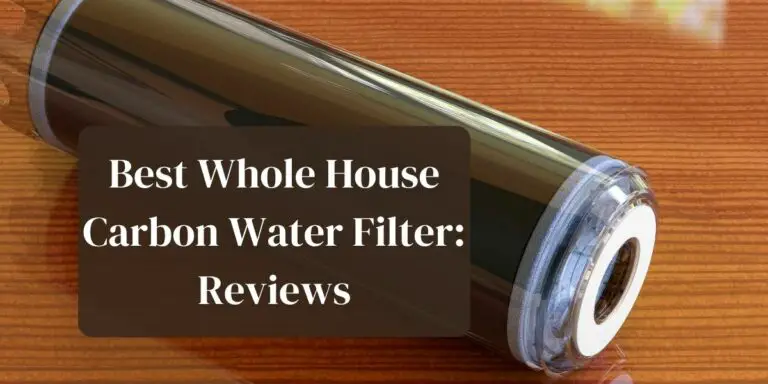
If you are comparing more intensive treatment, read our guides to reverse osmosis versus distilled water, distilled versus filtered water and whole-house carbon filtration.
Our verdict
Choose Brita Elite for long filter life, PUR Plus for a straightforward all-round option, LifeStraw Home for broad filtration, or Culligan ZeroWater when very low dissolved-solids output is specifically useful. The correct choice is the one whose current performance sheet names the contaminant you need to reduce.
We trust Brita. Eversince water filters came into existence, we have been filtering our waters. So far, the best water filter for us is Brita. The filtering quality is good and it is durable as well. Try it, this product will speak for itself.