The short answer: a whole-house carbon filter can be a good fit when a water test shows a problem that activated carbon is certified to reduce—often chlorine, taste, odor, or certain organic chemicals. It is not a universal purifier, and it does not soften hard water.
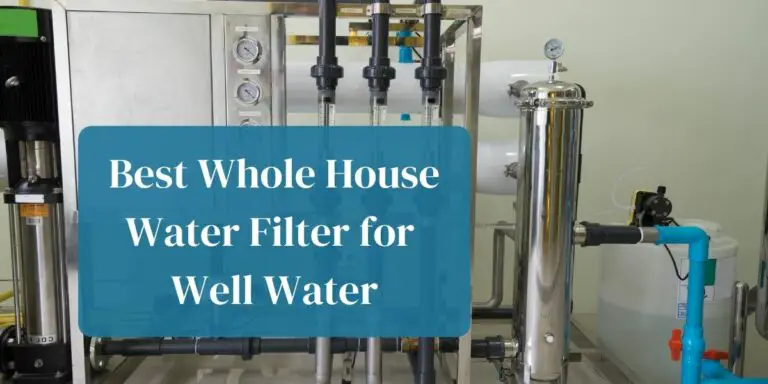
A whole-house, or point-of-entry, system treats water where the main supply enters the home. That gives every connected tap and appliance filtered water, but it also means the equipment must handle the home’s peak flow without a major pressure drop. The right system is chosen from test results, not from the longest contaminant list on a sales page.
What a whole-house carbon filter does
Activated carbon has an extremely porous surface. Contaminants attach to that surface through adsorption as water passes through the media. Granular activated carbon (GAC) is commonly used in larger tanks; carbon block is more common in cartridges. Contact time, carbon type, water chemistry, flow rate, and how much media remains usable all affect performance.
The U.S. Environmental Protection Agency notes that GAC can be effective for many organic contaminants, but the media must eventually be replaced or regenerated. Carbon is particularly useful for chlorine and for improving objectionable taste and odor. Catalytic carbon may be specified for chloramine, but the claim still needs independent certification and adequate contact time.
What carbon does—and does not—remove
| Concern | Typical carbon role | What to verify |
|---|---|---|
| Chlorine, taste, and odor | Often a strong use case | Certified reduction claim and rated capacity |
| Chloramine | May require catalytic carbon and more contact time | A specific chloramine claim, not a generic carbon claim |
| VOCs, pesticides, and some PFAS | Performance varies by chemical and system | Certification for the exact contaminant |
| Sediment | Not carbon’s main job | Use an appropriately sized prefilter if testing shows sediment |
| Hardness minerals | Carbon does not remove calcium or magnesium | Consider a separate water softener |
| Nitrate, fluoride, arsenic, salts, and microbes | Do not assume removal | Choose a treatment certified for the measured problem |
EPA guidance is explicit that a treatment device should match the contaminant. A carbon filter alone should not be relied on to make microbiologically unsafe water safe. If a private well tests positive for bacteria, follow the health department’s disinfection and corrective-action guidance rather than adding an unverified carbon tank.
Test the water before choosing equipment
Municipal-water customers should start with the utility’s annual Consumer Confidence Report, then test at the tap if there is a building-specific concern such as lead. Private-well owners are responsible for testing their water and should use a certified laboratory. Test for the suspected contaminants as well as characteristics—such as hardness, iron, manganese, pH, and turbidity—that can affect treatment.
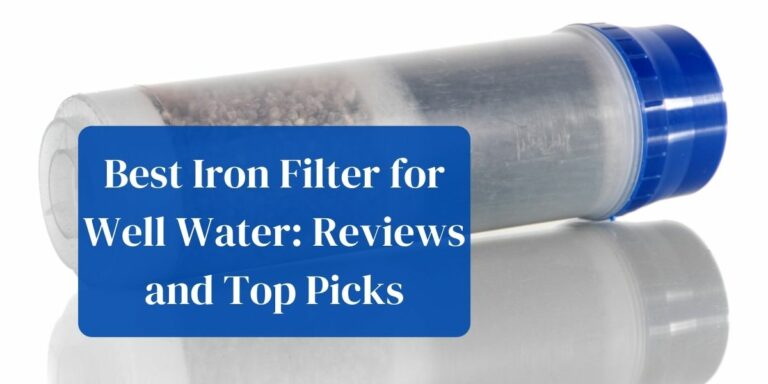
Testing prevents two expensive mistakes: buying carbon for something it cannot address, and installing so much treatment that maintenance becomes difficult. For example, orange staining or metallic taste may call for dedicated iron treatment; see our guide to iron filters for well water. Hardness calls for a different process entirely.
How to size a system
1. Match the service flow rate
Add up the fixtures that may run at the same time and compare that demand with the system’s rated service flow. A filter may advertise a high “maximum” flow that does not provide enough contact time for its contaminant claim. Use the certified service-flow rating where available, and ask the supplier to show the pressure loss at that flow.
2. Allow enough carbon contact time
More media and a slower flow generally give water more time to contact the carbon. Tank diameter, bed depth, plumbing layout, and backwashing requirements matter. A small cartridge can be useful for a modest chlorine load, but it may clog or exhaust quickly when asked to supply an entire home.
3. Plan pretreatment and drainage
Sediment can foul carbon and increase pressure loss. A sediment prefilter may be appropriate, but an unnecessarily fine cartridge can become a bottleneck. Backwashing carbon tanks need a drain and enough supply flow to lift and clean the bed. Cartridge systems need clearance for housing removal and a shutoff or bypass for service.
4. Protect drinking-water safety
Carbon removes disinfectant residual. That may improve taste, but it also means downstream plumbing no longer has the same chlorine protection. Keep the system maintained, follow sanitizing instructions, and do not stretch replacement intervals. If the water source can contain pathogens, treatment should be designed by a qualified professional.
Certification: read the claim, not just the logo
Look for certification by an accredited body and check the performance data sheet. NSF/ANSI 42 covers aesthetic effects such as chlorine taste and odor; NSF/ANSI 53 covers specified health-effect reductions. Other standards apply to particular technologies and contaminants. A standard number by itself is incomplete—the listing must name the contaminant, capacity, flow, and replacement conditions that were tested.
EPA recommends independent certification for home filters, and its PFAS guidance stresses choosing a device certified for the specific reduction claim. You can also search the certifier’s public database rather than relying on a marketplace description.
Installation and maintenance checklist
- Install a main shutoff, bypass, pressure gauges, and sampling points where practical.
- Confirm the plumbing material, port size, operating pressure, temperature range, and local code requirements.
- Record the installation date, meter reading, initial pressure drop, and baseline water-test results.
- Replace cartridges or media at the manufacturer’s rated capacity or sooner if testing, taste, odor, or pressure indicates a problem.
- Sanitize housings and replace seals exactly as directed; never lubricate drinking-water seals with an unapproved product.
- Retest for the target contaminant. Taste improvement is not proof that a health-related contaminant is being controlled.
A licensed plumber or water-treatment professional is sensible for a point-of-entry installation, especially on a private well or when a health-related contaminant is involved.
Whole-house carbon vs other treatment
| Goal | Usually relevant technology |
|---|---|
| Reduce chlorine taste and odor throughout the home | Whole-house carbon |
| Remove hardness minerals | Ion-exchange softener; review softener maintenance |
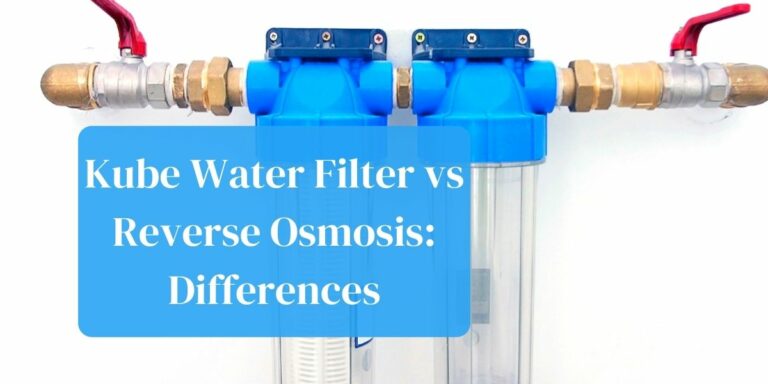
| Reduce a broad range of dissolved contaminants at the kitchen sink | Certified point-of-use reverse osmosis; compare RO and distillation |
| Control bacteria or viruses | Source correction and an appropriately validated disinfection barrier |
| Remove iron or manganese | Treatment selected from the element’s concentration and form |
The bottom line
A whole-house carbon filter is worth considering when testing identifies a carbon-treatable problem and you want that reduction at every tap. Choose by certified contaminant claim, service flow, capacity, and maintenance burden—not by a generic “stages” count. Carbon is a targeted tool, not a replacement for water testing or a cure for hardness, salts, every metal, and microbes.