
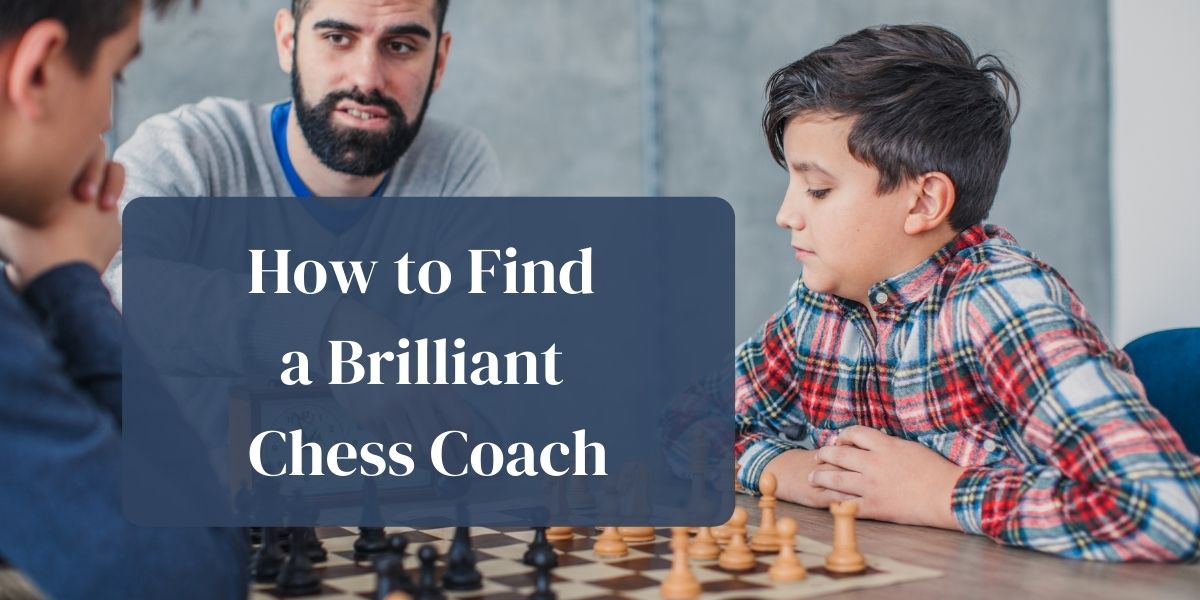
The original author hired three very different chess coaches over about a year: an online coach from the Philippines rated around 2000, a local coach in Norway rated around 2100 to 2200, and a grandmaster for one premium lesson. The least expensive regular coach produced the best overall experience because he was patient, prepared and skilled at teaching the author’s level.
That experience supports the central lesson of this guide: playing strength matters, but teaching fit matters more.
Online or in person?
| Online coaching | In-person coaching |
|---|---|
| Large choice across time zones | Stronger face-to-face connection |
| Easy screen sharing, studies and game databases | Natural over-the-board practice |
| No travel and often easier scheduling | Useful for young players or learners who focus better in person |
| Connection and audio quality can interrupt lessons | Local choice may be limited and travel adds time |
Chess works unusually well online because both people can inspect the same board, annotate variations and save the lesson. In-person coaching remains valuable when physical-board habits, concentration or local club connection are part of the goal.
Do you need a titled player?
A grandmaster can see more in a position, but that does not guarantee a better lesson for a beginner or club player. The author found the premium session interesting but less useful than repeated lessons with a patient coach who understood common beginner errors.
Choose enough playing strength for the problems you need to solve. Below expert level, clarity, preparation and experience teaching similar students usually matter more than the coach’s title.
Where to look
- Ask a local chess club or federation for coaches who work with your age group and rating range.
- Use the Chess.com coach directory to compare languages, ratings, profiles and lesson descriptions.
- Use the Lichess coach directory for another international pool of titled and experienced players.
- Ask players near your level who helped them improve and what the lessons actually involved.
Questions to ask before booking
- Which rating ranges and age groups do you teach most often?
- How will you assess my games and choose priorities?
- What should I prepare before each lesson?
- Will I receive annotated games, studies or a practice plan afterwards?
- How do you measure progress beyond rating alone?
- What happens if our schedules or connection fail?
Use a trial lesson as an audition
Send two recent slow games before the trial. A strong coach should identify patterns, explain one or two priorities and show how future lessons would address them. Be cautious if the lesson becomes a performance by the coach, a generic opening lecture or a sales pitch for a large package.
What good coaching looks like
- The coach asks how you reached a decision before showing the engine move.
- Explanations match your current level and avoid unnecessary variations.
- Homework is specific enough to complete and review.
- Your recurring mistakes shape the plan.
- The coach can disagree without making the lesson humiliating.
- After several sessions, you know what to practise between lessons.
Red flags
- Guaranteed rating gains or fixed timelines.
- Pressure to prepay for many lessons before a useful trial.
- No interest in your games, goals or available practice time.
- Using engine evaluations without explaining human decisions.
- A much stronger player who cannot translate knowledge into a clear plan.
A simple four-week test
Agree on one priority and one repeatable practice task. After four weeks, review whether you understand the issue better, recognise it during games and can complete the assigned work. Rating may lag behind genuine improvement, so judge the process as well as the result.
You can also browse the updated chess blogs and creators guide, compare Chess.com with Lichess, and use chess books to support the work between lessons.



If you’re still reviewing comments for this article, thank you for the helpful advice. I’d like to get the contact information of your instructor if possible.
Sure. His name is Michael Incamina:
Email: michael.s.icamina@gmail.com
WhatsApp: +639956511369
Hi! Would love to have your coaches contact info for my son.
Hi, I am the coach mentioned in that article. You can send me a message on my email or on WhatsApp.
Email: michael.s.icamina@gmail.com
WhatsApp: +639956511369
..
Hi Chris,
Thank you for sharing your experience. I would appreciate connecting with your coach in the Phillipines. I’m also going to start reading one of the books you recommended. Bee well!
With care,
Michael
Hi, I am the coach mentioned in that article. You can send me a message on my email or on WhatsApp.
Email: michael.s.icamina@gmail.com
WhatsApp: +639956511369
Please contact me.
I am very interested in the contact info for a coach. I am a beginner ie I have played for years but made little progress !! There was mention of a great coach in Manila. I am in the US. Thank you. N.
Hi, I am the coach mentioned in that article. You can send me a message on my email or on WhatsApp.
Email: michael.s.icamina@gmail.com
WhatsApp: +639956511369
Hi, thanks for your insights. Would you please share the contact info for the coach from the Philippines?
Hi, I am the coach mentioned in that article. You can send me a message on my email or on WhatsApp.
Email: michael.s.icamina@gmail.com
WhatsApp: +639956511369
Hello!
You should include http://www.chess-coaches.com in the top sites for coaching.
Its a great site!
Thanks for writing this article. I would love to get your chess coach’s contact.
Hi, I am the coach mentioned in that article. You can send me a message on my email or on WhatsApp.
Email: michael.s.icamina@gmail.com
WhatsApp: +639956511369
Great article.
Interested in your chess coaches contact 🙂
Hi Jordan! 🙂 Sure, I’ll send it to you.
Hi Amund,
Appreciate if you can share with me the contact of the Philippines coach ?
Thanks.
Lim
Hi Lim, sure, I’m sending an e-mail to both of you right away. 🙂
Thanks for posting this – exactly the information and insight I was looking for.
I’d also love to get the contact information of your instructor if you don’t mind.
Hi Chris, of course – I’ll do that for you. 🙂
Check your e-mail shortly.
Best regards,
Amund