Reverse osmosis can reduce several PFAS chemicals in drinking water, but not every RO product has a verified PFAS-reduction claim. If PFAS is the reason you are buying treatment equipment, check the certification for the complete system rather than assuming that any membrane will do the job.
This distinction matters because “reverse osmosis” describes a treatment process. It does not tell you which contaminants a particular product was tested against, how much it reduced them, or how performance changes as the system ages.
Why reverse osmosis can reduce PFAS
RO uses pressure to force water through a semi-permeable membrane. Many dissolved substances are rejected by the membrane and leave the system in a concentrated reject stream.
PFAS molecules vary in size and chemistry, but RO is among the treatment technologies used for PFAS reduction. NSF’s consumer guidance says products certified for PFAS reduction may use NSF/ANSI 53 or NSF/ANSI 58, depending on the treatment technology.
That does not mean the membrane is a universal barrier. The exact system, pretreatment, operating pressure, water chemistry, contaminant and maintenance all matter.
Look for a contaminant-reduction claim, not just a standard number
NSF/ANSI 58 covers point-of-use reverse-osmosis drinking-water systems. The standard includes requirements for materials, structural integrity, total dissolved solids reduction, product information and optional contaminant-reduction claims.
A crucial detail is that a product can conform to parts of a standard without carrying every optional contaminant claim. A storage tank, membrane housing or membrane may be certified for material or structural requirements only.
For PFAS treatment, search the certifier’s current product listing and verify that the exact model has the relevant PFOA/PFOS or PFAS reduction claim. Do not infer it from a logo on a component.
System certification is more useful than a certified component
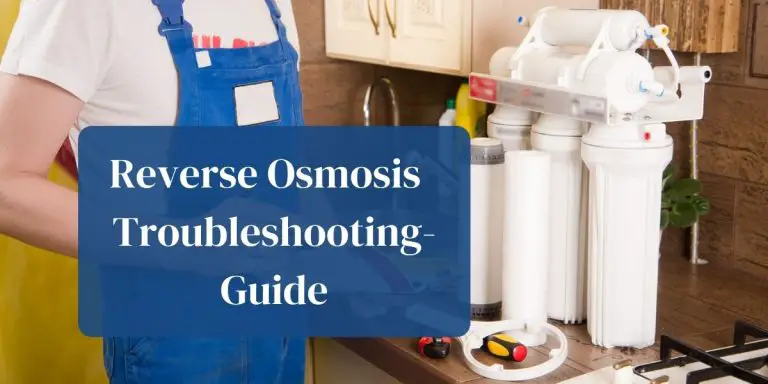
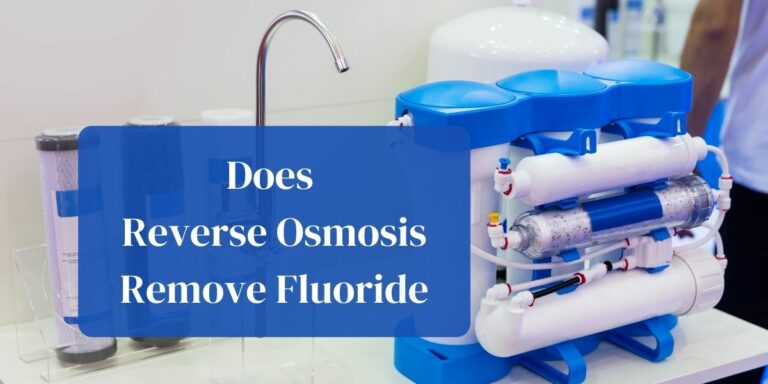
An RO system normally includes sediment and carbon pretreatment, a membrane, flow controls, tubing, a faucet and often a storage tank or pump. Each part affects the finished system.
If a seller says “uses an NSF-certified membrane”, ask a second question: Is the complete system certified for the contaminant I am trying to reduce?
This is one of the most useful checks when comparing products in our reverse-osmosis buying guide.
RO versus activated carbon for PFAS
Activated carbon can also reduce certain PFAS when the filter has an appropriate verified claim. Carbon and RO should not be treated as interchangeable labels, however.
| Question | Activated carbon | Reverse osmosis |
|---|---|---|
| Can it reduce PFAS? | Some certified products can | Some certified products can |
| Removes dissolved salts? | Usually no | Yes, broadly |
| Creates a reject-water stream? | No | Yes |
| Needs cartridge changes? | Yes | Yes, plus membrane servicing/replacement |
| Best proof | Exact certified contaminant claim | Exact certified contaminant claim |
If RO is more treatment than your water needs, compare the alternatives to reverse osmosis instead of buying the most complex system by default.
Maintenance is part of PFAS performance
A certification test is not permission to ignore the maintenance schedule. Carbon media can become exhausted, membranes can foul, seals can fail and flow conditions can change.
Use the manufacturer’s replacement intervals as a starting point and shorten them if validated water testing or system performance requires it. If the system uses a tank, keep tank pressure and sanitation within specification; our guide to RO tank pressure explains why poor tank performance can be mistaken for membrane failure.
What happens to the rejected PFAS?
RO does not destroy PFAS. It separates a portion of the contaminants from the treated water and sends them into the reject stream. That means the system reduces exposure at the drinking-water tap but does not make the chemical disappear.
Do not casually reuse PFAS-contaminated reject water on edible gardens or for another exposure pathway. Our broader guide to reusing RO wastewater assumes the source water is suitable for the proposed reuse; known contamination changes that decision.
RO is not a substitute for microbiological safety
Point-of-use RO systems are normally intended for water of known microbiological quality unless the particular system is specifically designed and certified for another use. If you rely on a private source with possible pathogens, treatment may require disinfection as well as contaminant removal.
This is why a water test should come before a shopping list. The best system is the least intensive treatment that reliably addresses the hazards actually present.
Australia’s PFAS limits are not the same as US limits
Australian households should interpret local results against Australian guidance. In 2025, NHMRC set separate health-based guideline values for PFOS, PFOA, PFHxS and PFBS. Our guide to Australia’s PFAS drinking-water guidelines explains the current numbers.
A US certification can still provide useful evidence about product performance, but it does not replace Australian health advice or a local water-quality assessment.
A seven-point buying check
- Confirm which PFAS has been detected and at what concentration.
- Check whether official advice recommends treatment.
- Search the certification database for the exact model number.
- Confirm the specific PFAS/PFOA/PFOS reduction claim rather than relying on the words “NSF certified”.
- Check rated capacity, flow, replacement intervals and availability of genuine replacement parts.
- Understand the reject-water ratio and installation requirements.
- Plan follow-up testing if PFAS reduction is the reason for treatment.
The bottom line
Reverse osmosis is a credible treatment option for PFAS when the specific system has evidence for the specific reduction claim. The process name by itself is not proof.
Buy from the contaminant backwards: test the water, identify the target, verify the current certification, maintain the equipment and confirm performance when the risk warrants it.