A bamboo keyboard or mouse can reduce the amount of visible plastic on your desk, but bamboo alone does not make an electronic product sustainable. The switches, circuit boards, radio components, batteries, adhesives and eventual e-waste still matter. In most cases, a durable conventional keyboard that you already own is greener than replacing it for a bamboo shell.
If you genuinely need a new peripheral, bamboo can still be a reasonable material choice. This guide explains what these products are, how to recognise misleading listings and which features matter more than a green-looking case.
Are bamboo keyboards and mice sustainable?
Potentially, but the answer depends on the whole product. Bamboo grows quickly and can be sourced from responsibly managed plantations. It can replace part of a petroleum-based plastic enclosure and may give a peripheral a long, attractive life. It can also be little more than a thin decorative veneer attached to an otherwise ordinary electronic device.
The global electronics problem is much larger than the case material. The Global E-waste Monitor 2024 reports that the world generated 62 million tonnes of electronic waste in 2022 and formally recycled only 22 per cent. A keyboard that works for ten years is usually a better environmental outcome than a beautiful “eco” keyboard that fails after two.
Three types of product sold as a bamboo keyboard
| Construction | What it means | What to check |
|---|---|---|
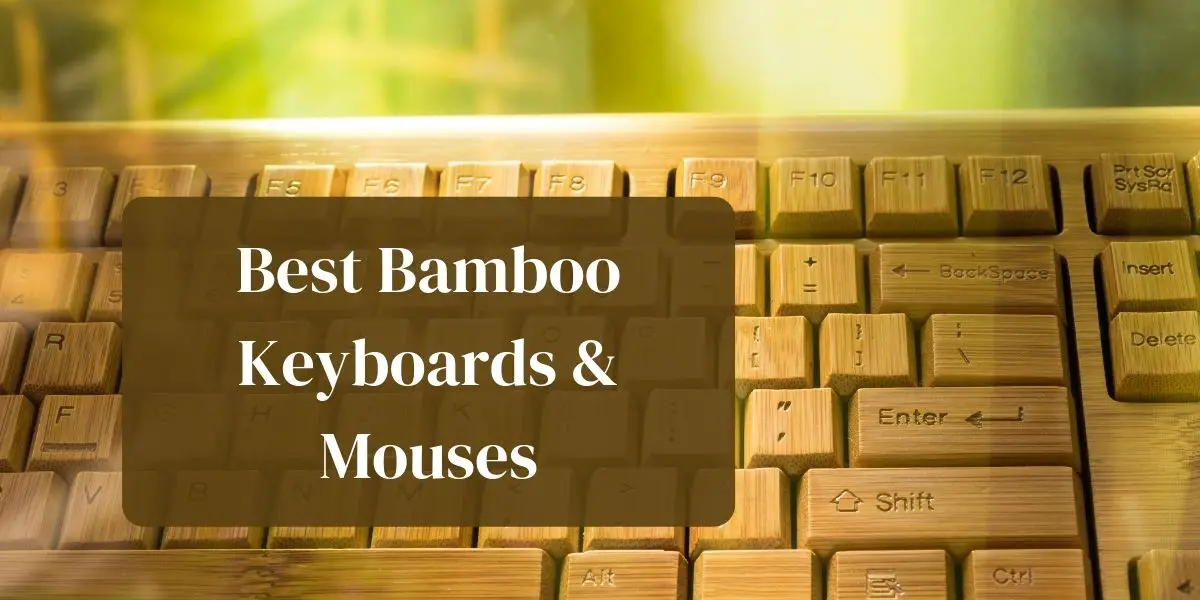
| Solid or laminated bamboo case | Much of the visible housing is bamboo | Joinery, finish, repair access and verified sourcing |
| Bamboo veneer or faceplate | A thin bamboo layer covers a plastic or composite body | How much bamboo is actually used and whether the veneer can delaminate |
| Bamboo-look plastic | A printed wood pattern with little or no bamboo | Material specification rather than product photography |
Descriptions such as “natural,” “eco-friendly” and “handcrafted” do not answer these questions. Look for a clear bill of materials, photographs of the underside and battery compartment, and a warranty from an identifiable manufacturer.
What to look for before buying
1. Durability and a real warranty
Prioritise reliable switches, legible keycaps, a stable wireless connection and a warranty long enough to reveal early failures. A vague marketplace brand with no replacement parts or support is a poor environmental bet, regardless of the case material.
2. Replaceable batteries or a wired connection
A wired keyboard avoids battery replacement altogether. For wireless devices, user-replaceable AA or AAA rechargeable cells can be easier to maintain than a sealed lithium battery. If a product contains lithium-ion batteries, the US EPA advises sending them to an appropriate electronics recycler rather than household rubbish or a kerbside recycling bin.
3. Compatibility and layout
- Confirm Windows, macOS, Android or iPadOS support.
- Check the regional key layout before ordering internationally.
- Decide whether you need a number pad, function row or multi-device switching.
- For a mouse, check size, handedness, sensor resolution and whether the switches are replaceable.
4. Verifiable bamboo sourcing
Bamboo is not automatically impact-free. The Forest Stewardship Council notes that poorly managed bamboo production can harm ecosystems, while FSC certification prohibits conversion of natural forests and applies responsible-management requirements. Look for a traceable FSC claim rather than an unsupported bamboo logo.
5. Repair and end-of-life options
A screwed case is generally easier to open than a fully glued one. Standard switches, removable keycaps and a replaceable cable can extend useful life. At end of life, treat the device as electronics, not compost. The bamboo case does not make the circuit board or battery biodegradable. The EPA’s certified electronics recycler guidance explains the R2 and e-Stewards systems used in the United States.
The best choice for each situation
- Your current keyboard still works: keep it. Extending its life avoids a new product and new e-waste.
- You want the lowest-maintenance option: choose a wired model with a clear warranty and replaceable cable.
- You need wireless: prefer replaceable rechargeable batteries, standard Bluetooth or a replaceable receiver.
- You want bamboo for appearance: verify whether it is solid bamboo, veneer or merely a printed finish.
- You need an ergonomic keyboard: prioritise fit and comfort. A device you cannot comfortably use will not have a long life.
Are bamboo keyboards vegan?
Bamboo keyboards are sometimes promoted as keyboards for vegetarians or vegans, but the case material does not prove that every adhesive, coating, lubricant or component is animal-free. Ask the manufacturer for a product-specific statement if this matters to you. “Bamboo” and “vegan” are not interchangeable certifications.
How to make the whole desk more sustainable
The peripheral is only one part of the setup. Keep equipment in service, buy refurbished where appropriate, use rechargeable batteries and avoid replacing devices for cosmetic reasons. You can also compare our guides to bamboo desk organisers, flexible eco-friendly materials, bamboo outdoor products and the trade-offs of bamboo cutting boards.
Verdict
A well-made bamboo keyboard can be a pleasant, lower-plastic choice when you actually need a new device. Buy for durability, compatibility and repairability first. Treat verified bamboo sourcing as one useful factor, not a shortcut that turns electronics into a zero-impact product.