
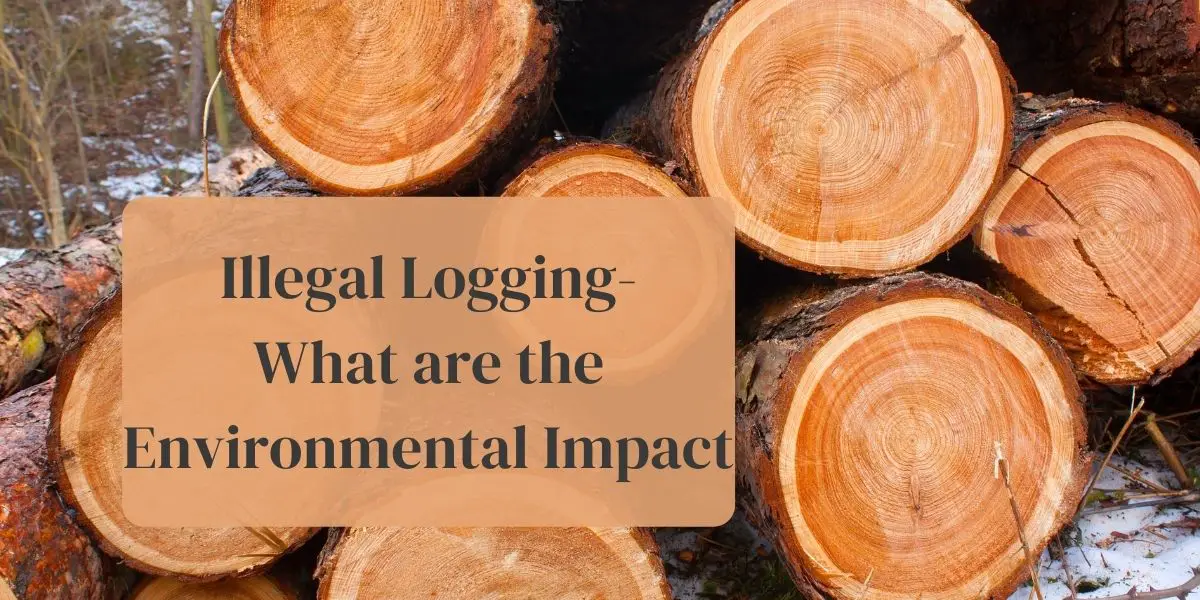
Illegal logging damages far more than the trees that are removed. It fragments habitat, releases stored carbon, degrades soil and water, increases fire risk, undermines Indigenous and local communities, and finances criminal networks. Because illicit timber can enter legal supply chains, the damage may be separated by thousands of kilometres from the final buyer.
Illegal logging includes harvesting in protected areas, exceeding quotas, using fraudulent permits, laundering timber through legal concessions, evading taxes and trading protected species. The exact definition depends on national law, but the environmental pathways are consistent.
1. Forest loss and degradation
Clear-cutting directly removes forest cover. Selective illegal logging may appear less severe, but roads, skid trails and canopy gaps degrade the remaining forest. Those openings make remote areas accessible to settlement, hunting, mining and further clearing. A forest can therefore remain visible on a map while losing much of its ecological integrity.
Repeated extraction also changes species composition. Valuable slow-growing trees disappear first, seed sources decline and the forest that regrows may store less carbon and support fewer specialist species.
2. Biodiversity loss and fragmented habitat
Forest species depend on connected habitat for feeding, breeding and movement. Logging roads and clearings divide populations, expose forest interiors to heat and wind, and make wildlife easier to hunt. Noise and machinery can disturb animals even where the canopy is not completely removed.
Illegal operations avoid the planning, seasonal restrictions, buffer zones and monitoring that are intended to reduce harm. Harvesting protected tree species can also eliminate specialised food and nesting resources.
3. Greenhouse-gas emissions
Felled and damaged trees release carbon as they burn or decay, while the remaining forest loses future carbon-storage capacity. Roads can trigger additional deforestation, multiplying the initial footprint. Soil disturbance and peat drainage can create further emissions in sensitive landscapes.
Illegal logging is not identical to all deforestation: agriculture, mining, infrastructure and fire are also major drivers. But illicit timber extraction can initiate or accelerate the conversion process and weaken programmes designed to protect forest carbon.
4. Soil erosion, landslides and poorer water quality
Tree roots stabilise slopes and forest litter cushions heavy rain. Removing cover and compacting soil with machinery increases runoff. Sediment then enters streams, reducing water quality and damaging fish spawning grounds and aquatic habitat. Poorly built logging roads and stream crossings are frequent erosion hotspots.
In steep or very wet terrain, destabilised slopes can raise landslide risk. Downstream communities may face muddier drinking-water sources, more variable flows and higher treatment costs.
5. Greater fire risk
Logging leaves branches and damaged vegetation that can dry into fuel. Canopy openings admit more sunlight and wind, making the forest edge hotter and drier. Roads also increase human access and ignition risk. In tropical forests not adapted to frequent fire, one burn can make subsequent fires more likely.
6. Harm to Indigenous peoples and local livelihoods
Many forest communities depend on intact land for food, medicine, materials, culture and income. Illegal operators may enter customary territories without consent, damage sacred places or threaten people who defend the forest. Lost government revenue also means fewer public resources for management and local services.
INTERPOL’s forestry-crime overview notes that illegal logging and timber trafficking threaten biodiversity as well as the livelihoods of people who depend on forest resources.
7. Corruption and organised crime
Timber can be laundered with false species labels, altered volumes, reused permits or mixing with legal wood. Bribery and document fraud weaken agencies that should protect forests. Profits may support wider criminal networks, while legitimate operators are undercut by wood whose price excludes environmental and social costs.
Recent international enforcement treats forest crime as a supply-chain problem, not only a poaching offence. INTERPOL and UNODC’s Project LEAP supports cross-border investigation of illegal logging, trafficking and associated financial crime.
How can illegal logging be reduced?
- Secure land and community rights: recognised tenure can strengthen local stewardship and accountability.
- Trace timber: chain-of-custody records, species identification and risk-based checks make laundering harder.
- Publish permits and concession data: transparency helps watchdogs compare legal harvests with what moves through ports and mills.
- Follow the money: financial investigation can reach organisers and beneficiaries rather than only workers at a logging site.
- Protect monitors and defenders: communities, journalists and officials need safe ways to report violations.
- Reduce demand for high-risk wood: buyers should verify origin, species and legality instead of relying on a generic “sustainable” claim.
What buyers can check
Ask for the timber species, country and region of harvest, supplier chain and certification claim. A recognised certification can reduce risk but is not a guarantee; verify the certificate number and product scope. Reclaimed, reused and long-lived timber products can reduce demand for new harvest when their provenance is clear.
Illegal logging connects climate change, biodiversity loss, pollution and governance—several of the largest environmental issues facing the world. Addressing it therefore requires forest protection, trade controls, enforcement and viable local livelihoods together.
Bottom line
The environmental effects of illegal logging are cumulative: a felled tree can lead to a road, a fragmented habitat, eroded soil, fire and further land conversion. Preventing that chain is more effective than trying to restore a forest after its ecological structure and community rights have been lost.






You know it’s the fast food chains who are chopping down the Amazon rainforest?
I am not surprised that Amazon is going down as McDonalds and Burger King keep earning money
Illegal logging is horrible for the environment. Look how bad it become in Amazon
illegal logging is a much bigger problem than what people think.
The thing is that illegal logging will never reach the news. Its not a fancy or sexy headline: “People in South America cuts down the Amazon”. .. that is simply because this is happening every day. And its an environmental problem that has been continiously growing every day since it started in the 80`s.
more people care about bushfires in California (because the rich people live there), fires in Australia (because its a popular country), the fact that we loose the whole elephant population (because they are cute), plastic pollution (because it can be seen by people), etc.
People do not have the right focus when it comes to which environmental problems we should focus on