
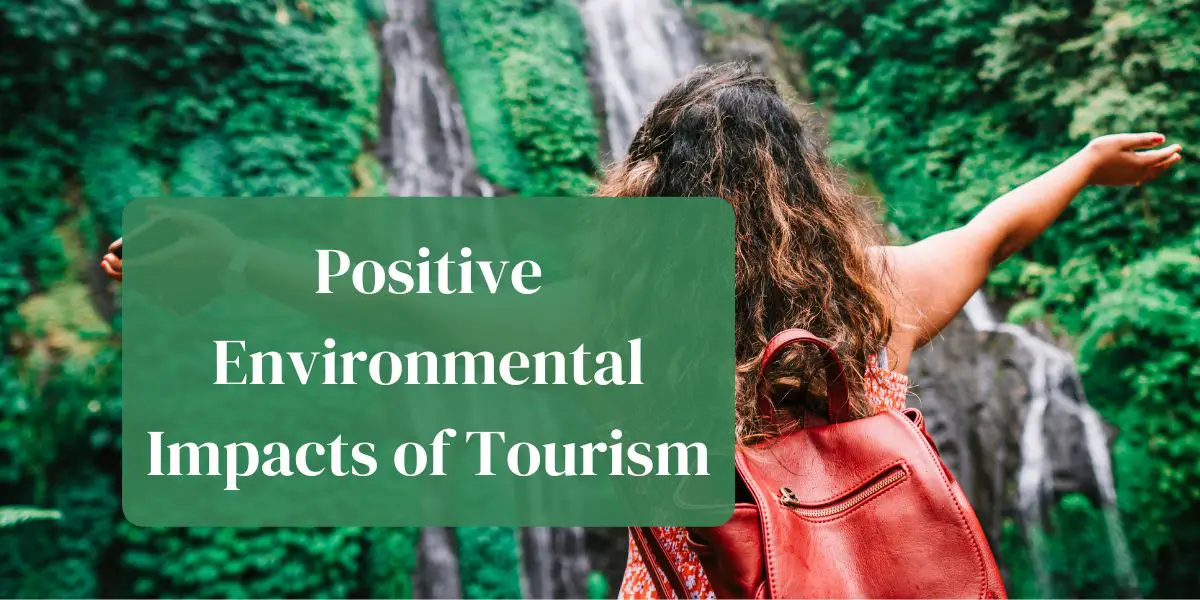
Tourism can benefit the environment when revenue, jobs and visitor attention are deliberately tied to conservation. It can help fund protected areas, make intact ecosystems economically valuable, support restoration and build public backing for nature. Those benefits are conditional. Poorly managed tourism can instead increase emissions, waste, water stress, habitat damage and wildlife disturbance.
Seven positive environmental impacts tourism can create
1. Direct funding for protected areas
Entrance fees, permits, tourism taxes, concessions and voluntary contributions can pay for rangers, habitat management, trails, toilets, waste systems and ecological monitoring. UNESCO’s sustainable-tourism guidance describes models in which visitor taxes and tourism-business revenue are returned to conservation work.
The word “can” is important. A fee is environmentally useful only when it reaches the site, is transparently managed and supports priorities identified by conservation managers and communities. Revenue that disappears into a general budget does not automatically improve the ecosystem visitors came to see.
2. A stronger economic case for keeping ecosystems intact
Healthy reefs, forests, wetlands, wildlife populations and landscapes can support guiding, accommodation, transport and other local services. That value can strengthen the case against destructive alternatives when local people receive a fair and durable share of the benefit.
IUCN notes that protected-area tourism can create economic benefits built on healthy wildlife, nature and authentic cultures, giving decision-makers another reason to conserve them. This works best when land rights are respected and income is not captured mainly by distant operators.
3. Jobs connected to conservation
Tourism can support rangers, naturalist guides, wildlife monitors, restoration crews and locally owned low-impact enterprises. These roles build practical knowledge and make conservation part of the local economy.
Jobs alone are not proof of environmental benefit. The work must be secure enough to matter, accessible to residents and linked to practices that protect the destination. Seasonal, poorly paid employment beside an expanding high-impact resort is a much weaker outcome.
4. Habitat restoration and better visitor infrastructure
Tourism revenue and volunteer programs can help restore dunes, wetlands, forests and trails, remove invasive species, rehabilitate damaged sites and install infrastructure that concentrates use in resilient areas. Boardwalks, marked routes, toilets and waste collection can reduce trampling and pollution when they are planned for local carrying capacity.
Restoration should repair ecological damage rather than provide a green backdrop for more development. The underlying project still needs environmental assessment, limits on construction and long-term monitoring.
5. Environmental education and behaviour change
A skilled guide or well-designed visitor centre can explain ecological relationships that are difficult to appreciate from a screen. Seeing a breeding colony, recovering forest or functioning wetland can turn an abstract conservation issue into a memorable experience.
The Convention on Biological Diversity encourages tourism operators to inform visitors about biodiversity and help them avoid damage. Education is most credible when the destination follows the standards it promotes: controlled access, wildlife-safe behaviour, low-waste operations and honest communication.
6. More monitoring and research
Visitor permits, guide observations, camera traps and carefully designed citizen-science programs can add useful information about wildlife, erosion, crowding and seasonal change. Tourism income may also support researchers and park staff who would otherwise lack field resources.
Data quality and animal welfare need controls. A photograph uploaded by a visitor can be useful, but revealing the location of a threatened species may increase disturbance or poaching risk. Projects should follow scientific protocols and protect sensitive records.
7. Community stewardship and political support
When residents help govern tourism and receive clear benefits, they may gain more influence and resources to defend local ecosystems. Visitors can also become donors, advocates or voters who support protected areas after returning home.
The CBD says sustainable tourism can improve biodiversity conservation particularly when local communities are directly involved. Consultation is not the same as control. Indigenous Peoples and local communities need meaningful authority, respect for rights and the ability to refuse development that conflicts with their priorities.
What makes the benefit real?
| Claim | Evidence to look for |
|---|---|
| Tourism funds conservation | Published revenue allocation, audited spending and conservation outcomes |
| Tourism supports communities | Local ownership, fair wages, procurement and decision-making power |
| Operations are low impact | Measured energy, water, waste and transport performance |
| Wildlife is protected | Distance rules, group limits, trained guides and disturbance monitoring |
| Visitor numbers are sustainable | Capacity limits, booking controls, seasonal closures and ecological indicators |
UN Tourism defines sustainable tourism as tourism that makes optimal use of environmental resources, respects host communities and supports viable long-term economic activity. Its sustainable-development framework applies to all forms of tourism, not only trips marketed as ecotourism.
How tourism’s benefits can be cancelled out
A conservation donation does not erase unlimited flights, habitat-clearing construction, freshwater extraction or overcrowding. Nor does an “eco” label guarantee good performance. Common warning signs include:
- visitor growth targets without ecological limits;
- small conservation payments beside much larger environmental costs;
- wildlife feeding, touching or close pursuit;
- benefits promised to communities without transparent distribution;
- heavy dependence on imported goods, fuel and labour;
- offset claims used instead of direct emissions reductions;
- marketing language unsupported by measured outcomes.
IUCN describes tourism in protected areas as a double-edged issue, with conservation opportunities alongside overcrowding, waste, weak benefit sharing and inadequate management capacity. Destination planning should therefore protect nature first and fit tourism within that boundary.
How travellers can increase the positive impact
- Choose locally owned operators that publish specific conservation practices.
- Visit outside the most crowded period when that genuinely reduces pressure.
- Pay legitimate park and permit fees rather than seeking informal access.
- Follow wildlife distance, trail, fire and biosecurity rules.
- Use refill systems where tap-water safety allows and refuse unnecessary disposables.
- Spend with local guides, food producers and businesses.
- Do not geotag sensitive species or places.
- Travel less often, stay longer and use lower-emission transport where practical.
These choices resemble good sustainability planning more broadly: define limits, measure effects and keep benefits local. Our guide to building a sustainable city applies the same principle to transport, land use, energy and public space. Anyone researching the field may also find these sustainable-tourism research topics useful.
The bottom line
Tourism’s clearest environmental benefits are conservation funding, stronger incentives to protect nature, restoration, education, research and community stewardship. None occurs automatically. A credible project shows where the money goes, who makes decisions, how visitor pressure is limited and whether ecological conditions are actually improving.



Hello, thanks for your article there. So about 11 % of all jobs in the world are somehow related to tourism?
That is new information to me. I was also quite shocked to see that so many cities are 100 % dependent on tourists to even survive. There are loads of people that try not to travel too much simply because it leaves a huge carbon footprint. Especially if you want to travel to another continent. On the other side, I feel that this is something that maybe governments around the world need to figure out?
How can they push people to travel in a more eco-friendly way?
There are some things you really should NOT do when you are on holiday. For instance, supporting cruise ships or airplane companies. Every time I see huge cruise ships filled with Asian tourists driving into the beautiful fjord landscape of Norway, I feel sad. This is not how we should take care of our nature.
There are so many reasons why we should not travel in the way we do right now. We need to stop the current madness.
Hello Non-traveler, you are right. Cruise ships are actually among the worst when it comes to pollution. Luckily, EU have decided to put some quite heavy restrictions on the fuel they are allowed to use. I don’t think that will solve the problem, but it will definitely help quite a bit.
I am concerned about the development in the travel industry. Yesterday I read an article saying that China will build 200 airports in 2019 alone. That’s not very good for the environment (to say at least).
Traveling in general is not exactly very environmental friendly. If you can help someone that are struggling in the jungle by supporting them financially: great. But it does not take away the fact that mass tourism is a very bad thing for the environment.
Greenhouse emissions that can be traced back to the TRAVEL INDUSTRY are massive.